

In 1869, the Japanese Meiji government established the Kaitakushi, the Hokkaido Colonization Office, to coordinate the settlement and development of Japan's northern island. The official rationale was twofold: to defend the territory against potential Russian expansion in the Pacific north, and to absorb the rapidly displacing population of unemployed shizoku - former samurai whose feudal status the Meiji reforms had abolished. The unofficial rationale was the same as most state-sponsored colonization programs of the period: the new state needed to convert a politically dangerous internal population into a useful external one. The shizoku had military training, no land, no economic role, and a recent history of armed rebellion against the Meiji order. Sending them to Hokkaido solved several problems at once. They were given small grants of land, agricultural tools, a modest stipend, and the work of building roads, ports, agricultural systems, schools, and the early urban grid of the city now called Sapporo. The Ainu, the indigenous population whose island Hokkaido had been for the previous several thousand years, were displaced from their traditional fishing and hunting territories, prohibited from speaking their language in schools, and registered as Japanese subjects under the 1899 Former Aborigines Protection Act. The frontier was settled. The settlement was, in the official record, a heroic achievement of Meiji-era national development. The settlement was, in the more complete historical record, a multi-decade process of state-coordinated displacement of one population by another, conducted by people who had been given no other available life and who built the infrastructure of the new society because the building was the condition under which they were permitted to live.
This is what most actual frontier settlement has been, on the historical record across many specific cases. The frontier myth - the heroic settler arriving at empty land, transforming it through individual labor and courage into a productive society - has been a useful national-mythological narrative for many polities across the past three centuries. The historical reality has been substantially different. The frontier has rarely been empty. The settlers have rarely been there by choice. The labor of settlement has been overwhelmingly the labor of infrastructure-building under state coordination, performed by populations whose displacement made them available for the work. The American West, the Australian outback, the Argentine pampas, the Brazilian Amazon, the Russian steppes east of the Urals, the Hokkaido of the Meiji era, the post-1948 Israeli kibbutzim, the post-1971 Chinese borderlands, the post-1991 Russian Far East: each of these has been, in its specific historical conditions, a frontier whose actual settlement looked more like the Hokkaido pattern than like the Turnerian heroic narrative. The myth has persisted because the myth is more flattering. The reality has persisted because the reality is what produces the actual cities, ports, and agricultural systems the myth eventually celebrates.
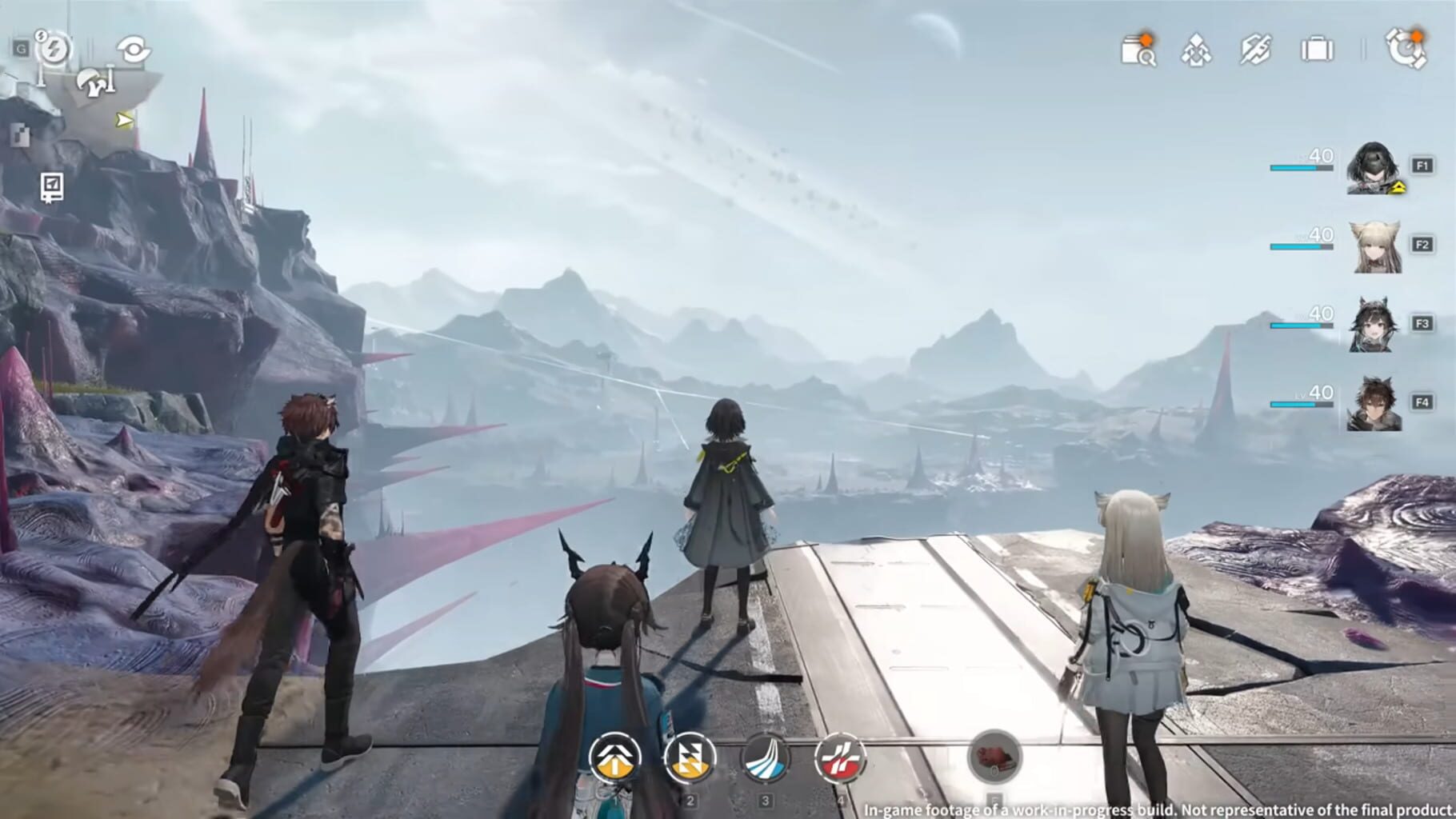
Arknights: Endfield, the 3D RPG that Chinese studio Hypergryph and its overseas subsidiary Gryphline launched in January 2026 after a long development and a globally large pre-registration audience, is - almost in spite of its surface presentation as a heroic frontier-exploration fantasy - an unusually honest commercial entry in this longer frontier-historical conversation. The game places the player on a dangerous planet called Talos-II, asks the player to build the facilities, roads, refineries, and protective installations the settlement requires, and integrates the building loop with combat, exploration, and the broader gacha-RPG character roster the franchise's first entry established. The setting's specific genre-furniture - the alien planet, the post-apocalyptic gloss, the player-character as a Kaitakushi-style developer of an unknown territory - is the Turnerian heroic frontier register that gacha-RPG marketing tends to deploy. The setting's substantive content is closer to the Hokkaido pattern than to the heroic one, and the closer the player looks, the more visible the gap becomes.
The frame this essay wants to give the reader extends past Endfield to the broader category of frontier games and toward the cultural history of frontier narrative itself. The frame is this: frontier mythologies are unusually persistent in commercial cultural production because they offer a flattering protagonist position - the heroic settler whose labor transforms an empty space into a productive one - that the surrounding cultural conditions structurally rarely permit. The actual labor of building the world the contemporary adult occupies is mostly invisible to the adult, performed by people whose names the adult does not know in places the adult does not visit, on a timescale the adult cannot perceive. The frontier game restores, in compressed fictional form, the visibility of the labor: the road is being built by someone the player can identify, the refinery is being placed by the player's decisions, the settlement is being made habitable by the player's hands. The pleasure is the pleasure of seeing one's labor become the conditions of one's life. The pleasure is rare in the actual contemporary economy. The frontier game makes the pleasure available in fantasy form.
Frederick Jackson Turner, the American historian whose 1893 lecture The Significance of the Frontier in American History established the foundational twentieth-century academic framework for thinking about frontier settlement, gave the original argument for why the frontier mattered as a cultural-historical proposition. Turner's claim, delivered at the World's Columbian Exposition in Chicago in the year the US Census Bureau had officially declared the American frontier closed, was that the existence of the frontier had been the central formative force in the development of American character and political institutions. The frontier, in Turner's account, had repeatedly stripped settlers of their Old World cultural inheritance and forced them to re-create civilization from primitive conditions. The repeated re-creation, Turner argued, had produced the specific democratic, individualist, and pragmatic character that distinguished American political life from its European antecedents. The frontier had made America, in Turner's foundational claim, what it was.
Turner's thesis has been one of American historiography's most-influential and most-criticized arguments. It dominated the academic conversation about American identity for roughly seventy years. It also did substantial work in legitimating the cultural-political project of westward expansion and in obscuring the actual conditions under which the expansion occurred. The Turner thesis treated the frontier as empty, the settlers as autonomous agents, the transformation as morally clean. None of the three was historically accurate. The corrective scholarship that emerged in the 1980s and 1990s, gathered under the loose academic banner of New Western History, has spent the past four decades dismantling Turner's specific claims while preserving the more general recognition that the frontier had been culturally formative in ways the standard narrative obscured.
Patricia Limerick, the historian whose 1987 The Legacy of Conquest became the standard reference for the New Western History, made the foundational corrective argument. Limerick's claim was that the American West had not been a frontier in Turner's sense at all. The West had been a colonial conquest, conducted by a state that was deliberately replacing one population with another through legal mechanisms (the Homestead Act, the Indian Removal Act, the General Allotment Act), military mechanisms (the multi-decade Indian Wars), economic mechanisms (the railroad-driven displacement of indigenous economies), and demographic mechanisms (the federal coordination of European-immigrant settlement on lands the state had taken). The settlers had not been autonomous agents arriving in empty space. They had been participants in a state-coordinated conquest of an inhabited region. The frontier myth, in Limerick's argument, had been a particularly successful piece of national self-misrecognition, allowing the conquest to be remembered as a heroic settlement rather than as what the historical record showed it had been.
The implication of Limerick's framework for frontier games is that the cultural-historical inheritance such games are working within is substantially more complicated than the standard heroic frame admits. Most frontier games in commercial production have, on a careful look, treated the frontier in some version of Turner's framework: the land is empty, the settler is heroic, the labor is morally clean. The genre's most-celebrated examples - Red Dead Redemption, Subnautica, No Man's Sky, parts of the broader survival-crafting category - operate at varying distances from this default. Some make small gestures toward the more honest history (the indigenous presence in Red Dead Redemption 2's Wapiti reservation arc, the alien remains in Subnautica's lore). Most do not.
Arknights: Endfield is, on a careful look, doing something more interesting than the standard heroic frame admits. The player's frontier on Talos-II is, in the game's specific fiction, a frontier occupied by a previous civilization whose ruins the player encounters, by indigenous biological systems the player has to learn to operate inside of, and by the player's own character roster - characters whose Arknights-canon backgrounds include the Originium-infected populations that the franchise's earlier games established as displaced from mainstream Terran society. The player on Talos-II is, in the franchise's larger fiction, settling there partly because the alternative is to remain unwelcome in the cities the previous games rendered. The settlement is not heroic in the Turnerian sense. The settlement is what the displaced characters do because they have been given no other available life. The infrastructure they build is the condition under which they are permitted to continue existing.
This is, in the conditions the game places itself in, an unusually honest piece of frontier-historical writing for a commercial gacha RPG. The honesty is partly accidental - the game's design priorities are commercial rather than historical - but the honesty is real. The player who builds the refinery on Talos-II is, in the game's accumulating fiction, doing exactly what the Meiji-era shizoku did on Hokkaido: converting state-managed exile into productive labor, building the infrastructure that will make the new place inhabitable, performing the work that no other available position offered. The character roster the player gradually assembles is a portrait of who actually settles frontiers, on the historical record: the dispossessed, the displaced, the politically inconvenient, the medically unwelcome, the population the metropolis has decided to manage by moving elsewhere.
Susan Leigh Star, the American sociologist whose 1999 essay The Ethnography of Infrastructure helped establish infrastructure studies as a serious academic field, made the further argument the analysis requires. Star's claim was that infrastructure - roads, pipes, electrical grids, communication networks, supply chains, standards, classifications, databases - is one of the most powerful and least-studied substrates of social life. Infrastructure tends to be invisible to the people using it; the user pays attention to infrastructure mainly when the infrastructure fails. The invisibility, in Star's argument, is part of how infrastructure works: a functioning grid is one the user does not have to think about. The invisibility is also why infrastructure is so politically loaded. The decisions about what infrastructure to build, where, when, and for whom, are some of the most consequential political decisions any society makes, and they are made mostly outside the political conversations that the surrounding citizens are organized around.
Endfield's design makes infrastructure the activity. The roads the player lays down become the conditions of further exploration. The refineries the player builds become the conditions of further crafting. The defense towers the player places become the conditions of further habitation. The player who has spent forty hours in the game has, in the small interactive way the form permits, been doing the kind of infrastructure-building work the surrounding economic life depends on and obscures. The work is fictional. The cognitive practice of treating infrastructure as the activity rather than as the background is real. The reader who has played the game has, in a small way, been practicing a kind of seeing the surrounding life mostly does not encourage.
There is a small careful note worth adding. The free-to-play gacha-RPG business model that the franchise operates inside has, for legitimate reasons, attracted critical scrutiny across the past several years. The model's incentives are not always compatible with the model's stated artistic commitments. Many free-to-play games have produced narratives that are, in the strict commercial-design sense, organized around extracting recurring monetary engagement rather than around delivering substantive cultural content. The Arknights franchise has been, on the available evidence, one of the better operators in this model. Its narrative depth is real. Its character writing has been consistently substantive. The studio has resisted some of the more egregious extraction patterns the broader gacha market has normalized. None of this exempts the game from the structural pressures the business model imposes. The infrastructure-building loop in Endfield, like all loops in gacha-RPG design, will be calibrated against the monetization curve. The frontier-historical work the design is doing is real; the frontier-historical work happens inside a commercial form whose larger incentives the work has to operate within.
The frame the reader should walk away with: frontier mythology is one of the more persistent and historically misleading cultural narratives in commercial cultural production, and the games that work in the frontier register vary widely in how honestly they engage with the historical record. Notice, when the next frontier game arrives, whether the design treats the frontier as empty, as occupied, or as the kind of complicated multi-population situation the historical record overwhelmingly shows actual frontiers to have been. Notice whether the player-character's settling is framed as choice or as the absence of choice. Notice what gets built and what the building is the condition of. The choices the design is making are choices about how the form is participating in a long cultural conversation about settlement, conquest, and labor - and the choices, when noticed, become legible as the historical commitments they always were.
The Hokkaido refinery the shizoku helped build in 1885 is, by 2026, a small industrial museum the prefectural cultural board maintains for school tours. The original building has been preserved. The story attached to the building has been compressed for the school-tour audience into a brief narrative about Meiji modernization and the heroic development of the northern frontier. The fuller story - about who the shizoku were, why they were available for the work, what the Ainu lost, how the development served which interests - is in the academic histories the school tours do not assign. The cultural-historical work of remembering the frontier in its more complete form is being done, by scholars and curators and the small number of cultural objects willing to take the work seriously, against the longer cultural pressure to keep the heroic version available. Endfield is, in its own small commercial register, one of the cultural objects helping. The help is partial. The help is real. The infrastructure being built on Talos-II is, in some structural way the game has not quite said out loud, the kind of infrastructure that has always been built by the people the metropolis has decided to send elsewhere.