
In a small village in the Yamanashi prefecture of central Japan, an elderly woman in her eighties is teaching a researcher from Tokyo how to weave a specific kind of basket. The basket is made from a local fiber the village has been processing in this specific way for at least four generations. The researcher is recording the demonstration in video, in audio, and in handwritten notes. The video and audio are for the archive at the prefectural cultural center. The handwritten notes are for the researcher, who has come to this village because the village is, on the available demographic projection, going to be uninhabited within twelve years. The woman is the last person who knows how to make this basket. Her two adult children live in Tokyo and Osaka and have not, on their own honest accounting, been interested in learning. The basket will continue to exist as an object - examples are in the prefectural museum, photographs are in the regional encyclopedia, the technique can probably be reconstructed by someone competent who reviews the documentation - but the practice of making it by a person who has been making baskets like it since she was nine years old, with the small specific adjustments and embodied knowledge that practice has accumulated, will end with her. The researcher is, in the small specific way the contemporary academic field of cultural-memory studies has been developing for forty years, racing the demographic clock.
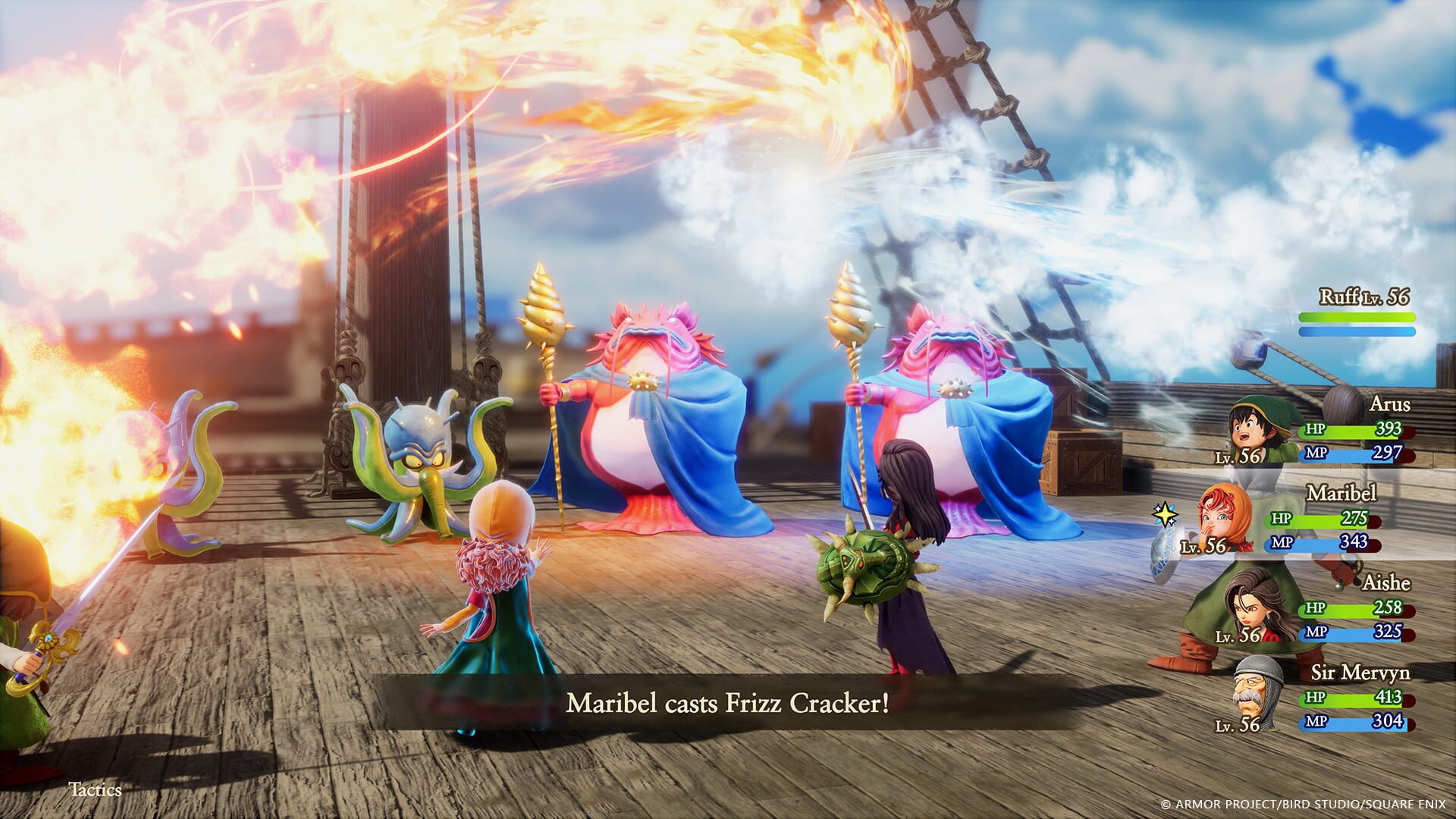
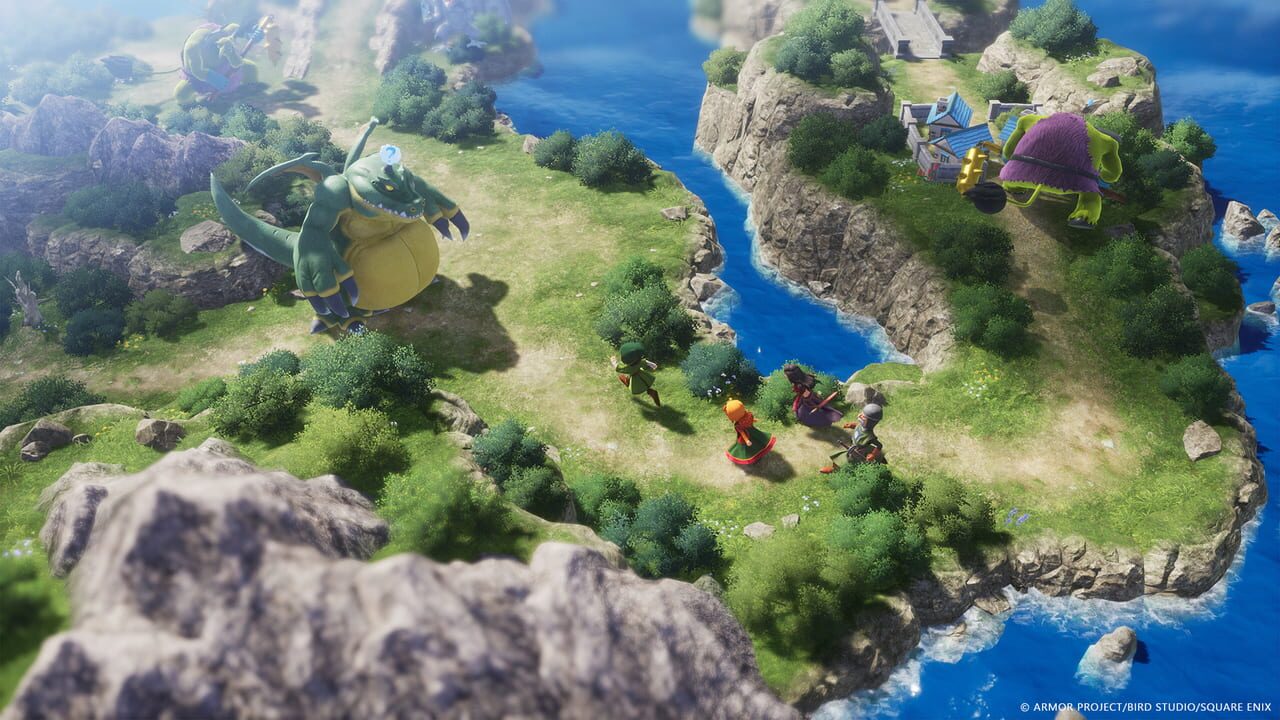
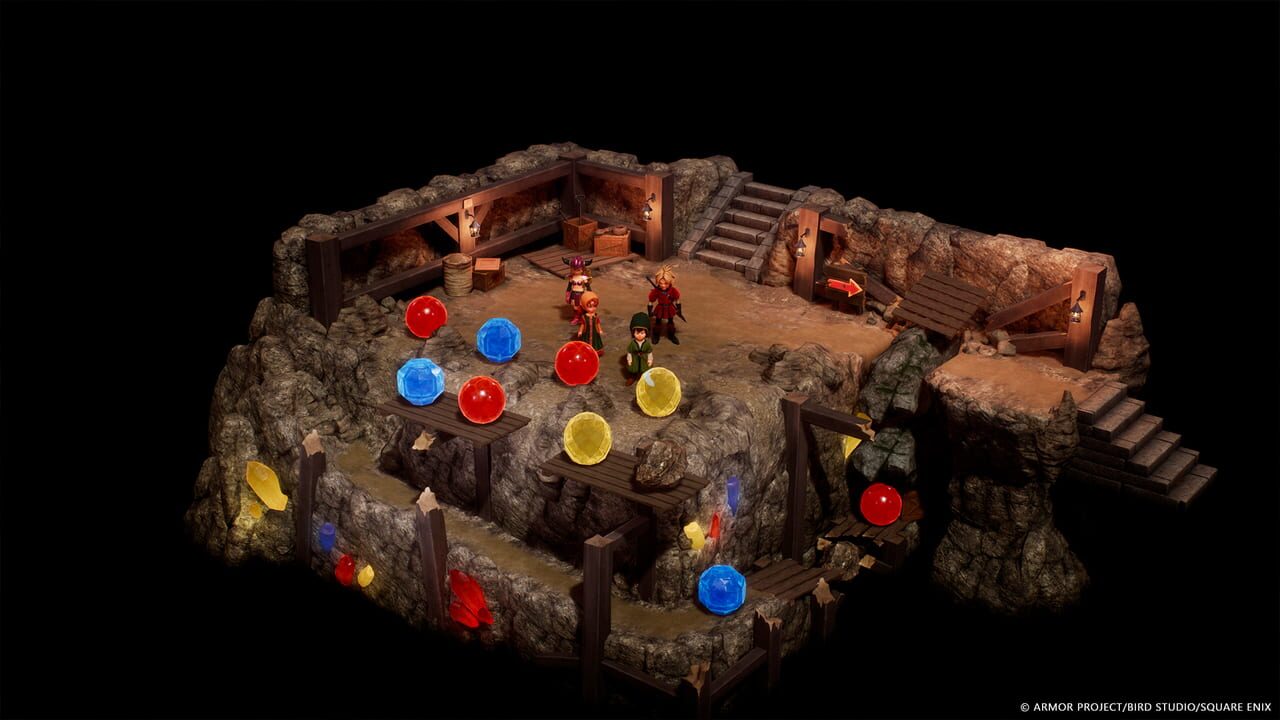
This is the historical situation Dragon Quest VII Reimagined, the Square Enix remake of the 2000 PlayStation original released worldwide on February 5, 2026, is the commercial fantasy form of. The original Dragon Quest VII was, when it appeared in Japan in August 2000 at the end of the 32-bit era, the strangest entry in one of Japan's longest-running RPG franchises. The game opened on a single small island surrounded by ocean that, the player would gradually come to understand, was the only remaining inhabited place in a world that had once been much larger. The world had been, in the game's mythology, forgotten - pieces of it had been removed from history by an antagonist powerful enough to operate on the level of collective memory itself. The protagonist's task, across the game's roughly hundred-hour campaign, was to find fragments scattered across the island, place them on a pedestal that the game's specific cosmology made narrative sense of, and use the fragments to travel back to islands that no longer existed in the present, restore the local situations that had caused those islands to be forgotten, and gradually return the world's full geography to the present-day map. Each restoration was a discrete village-scale story. Each story was completed before the next began. The world, by the campaign's end, had been re-assembled from village-level memories of pain, injustice, grief, betrayal, and small ordinary kindness, each one restored not by world-saving heroism but by patient outsiders learning what had happened locally and helping the local situation toward what the game's design treated as repair.
The frame this essay wants to give the reader extends past the game and past Dragon Quest. The frame is this: the village is one of human history's most-underrated units of historical memory, and most contemporary narrative forms - including most contemporary games - are structurally bad at honoring it. The dominant narrative forms of late-twentieth-century mass culture have been organized around scale: the war, the empire, the global crisis, the chosen-one prophecy that operates on planet-level stakes. The lived experience the participants in those mass-cultural forms have actually had has been overwhelmingly village-scale: the specific neighborhood, the specific street, the specific family, the specific small set of social relationships within which most of any given person's life occurs. The mismatch has been recognized by the academic field of cultural-memory studies for decades and has been only intermittently absorbed by the commercial cultural-production industries. Dragon Quest VII is one of the medium's clearest commitments to the village as the unit of historical narrative, and its 2026 remake is an opportunity to ask whether the form has aged well into a moment when the underlying historical conditions have made the village-scale registration more urgent rather than less.
Walter Benjamin, in his 1936 essay The Storyteller, gave the foundational twentieth-century framework for what was being lost when narrative forms shifted from village-scale to scale-of-modernity. Benjamin's argument, written from the position of a German-Jewish intellectual whose own world was about to be permanently destroyed, was that storytelling - the specific cultural practice of one person telling a story to a small group of others who would carry it forward - had been the dominant pre-modern form for transmitting accumulated human experience. The storyteller, in Benjamin's account, was a craftsman whose product was wisdom: the small specific compressed lessons of a life that could be passed from one person to another in the slow recursive way the village-fire-circle made possible. Benjamin's claim was that the rise of the novel and, later, of mass-media journalistic information had structurally displaced storytelling. The novel was a solitary form; the reader experienced it alone, and the wisdom the novel might contain was not transmitted in the storyteller's social way. Information, the still later form, was even less storyteller-like: information was discrete, decontextualized, instantly disposable. The wisdom-transmission function that storytelling had performed for many millennia had been progressively withdrawn from contemporary life, and Benjamin's essay was, in the specific historical moment of 1936, a quiet alarm about what the withdrawal was costing.
Benjamin's argument has aged into one of the more accurate diagnoses of twentieth-century cultural change. The dominant forms of contemporary cultural transmission are even less storyteller-like than the novel or the newspaper that Benjamin was writing about. The social-media stream, the streaming algorithm, the search-engine result, the AI-generated summary, are all forms whose structural relationship to wisdom-transmission is roughly zero. Information continues to be transmitted in increasing quantity; the transmission of wisdom, in Benjamin's strict sense - the slow contextual carrying-forward of what one human life has learned that the next human life can use - has become a specialty practice with no mass-market form.
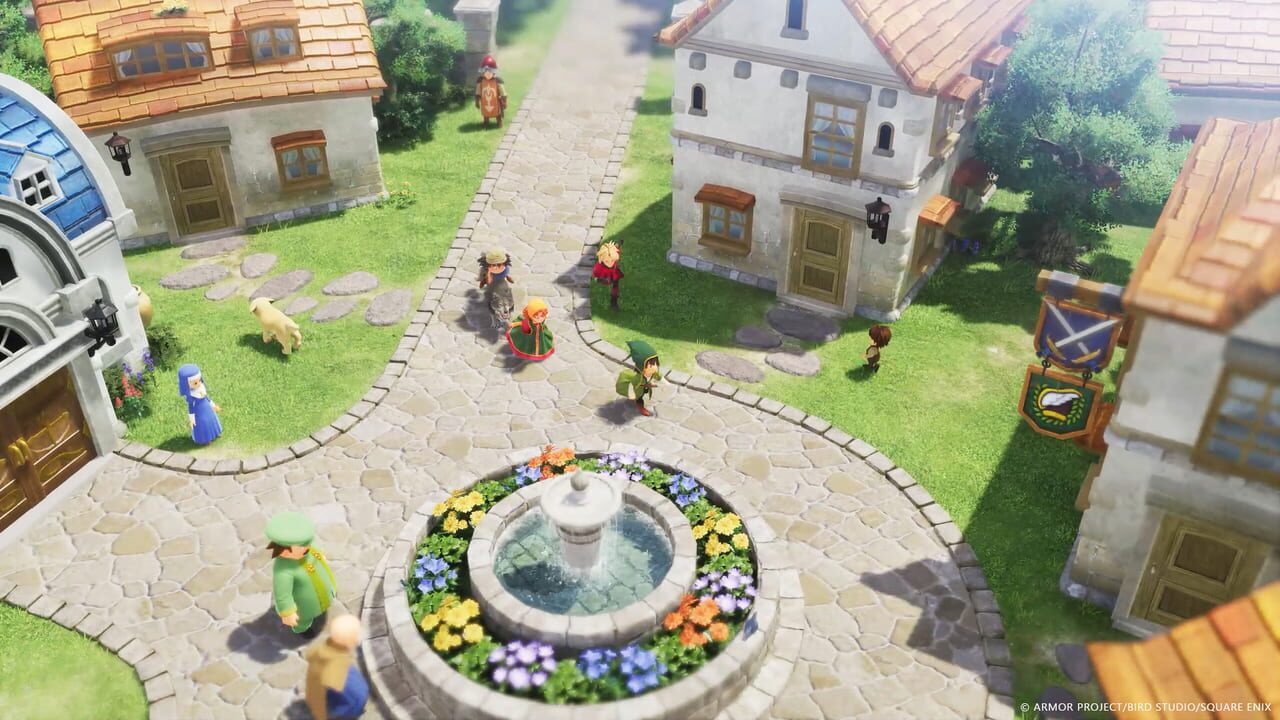
This is the cultural background against which Dragon Quest VII's village-scale narrative architecture deserves to be re-examined. Most commercial RPGs do not honor the village. The genre's dominant convention is the world-tour: the protagonist visits many towns, each town has roughly one or two functions in the larger plot, the towns serve as set-pieces and resource-hubs rather than as the locations where the game's substantive narrative happens. The town in the standard genre convention is a place the protagonist passes through. The substantive narrative happens elsewhere - in palaces, in dungeons, in encounters with named antagonists who operate at scales the towns do not.
Dragon Quest VII inverts this convention. The towns are where the game lives. The substantive narrative happens almost entirely at the village scale. Each restored island contains a complete small story whose stakes are local: the elder who cannot reach reconciliation with the dead daughter, the priest whose faith has been broken by the unsolved crime, the children who have been waiting for an absent parent, the village whose curse has a specific local cause and a specific local repair. The protagonist's job is to enter the local situation, understand what has happened, and contribute whatever the local situation specifically needs. The world is saved not by defeating a global enemy at the end. The world is saved by restoring enough village-scale situations that the cumulative restoration becomes a world.
This is, in Benjamin's framework, the storyteller form of RPG-narrative design. The game has been collecting and retelling village-scale stories at a rate the genre rarely approaches. The cumulative experience, across the hundred-hour campaign, is closer to reading a substantial story collection than to playing a heroic-quest fantasy. Each story is complete. Each story is local. Each story is the kind of story that, in Benjamin's earlier village-fire-circle, would have been told and retold, with the wisdom in each one slowly accumulating into the cultural inheritance of the people who lived around the fire.
Svetlana Boym, in her 2001 The Future of Nostalgia, gave the second piece of the framework. Boym distinguished between two operationally different forms of nostalgia: restorative nostalgia, which seeks to literally rebuild a lost past as if the loss could be undone, and reflective nostalgia, which sits with the longing without insisting that the loss can be reversed. Restorative nostalgia is the nostalgia of certain political-cultural movements (the back-to-the-fifties impulse, the medieval-revival fantasy, the romantic-nationalist project). Reflective nostalgia is the nostalgia of much serious literature, of careful memoir, of mature historical work that knows the past cannot be returned to but can be honored. The two are, in Boym's argument, not symmetrical. Restorative nostalgia is structurally susceptible to false certainty and to political weaponization; reflective nostalgia is structurally more honest about loss but offers less immediate emotional payoff.
Dragon Quest VII Reimagined, as a remake of a twenty-six-year-old game, sits at the crux of Boym's distinction. The remake project is, on its surface, a restorative-nostalgia gesture: the lost game is being rebuilt for the contemporary audience, the original is being made accessible again, the past is being recovered. The remake's internal narrative is, on its content, also restorative: the campaign is literally about restoring lost islands to the present-day world. Both registers operate in restorative mode. What the remake has the opportunity to do, on a careful read, is to bring the reflective register alongside the restorative one. The original game was, in 2000, a state-of-the-art PlayStation RPG that read as the franchise's contemporary entry. The remake in 2026 cannot, in any honest sense, be the same object. The remake is necessarily a meditation on the gap between 2000 and 2026 - on what twenty-six years of cultural-historical drift have done to the original's surrounding context, to its players (the ten-year-old who played the original in 2000 is now thirty-six), to the franchise's own historical position. The remake that pretends the gap is not there is doing restorative nostalgia in Boym's narrow sense. The remake that lets the gap be felt is doing the more honest reflective nostalgia. The early returns suggest Reimagined lands closer to the reflective register than to the restorative one, partly because the original's structural commitments - the patient village pacing, the small-scale stakes, the village-scale narrative - are themselves the kind of formal commitments that reward reflective rather than restorative engagement.
Aleida Assmann, the German cultural-memory scholar whose 2011 Cultural Memory and Western Civilization consolidated decades of work in the field, made a distinction that bears on the remake's specific historical work. Assmann distinguished between communicative memory, which is the memory carried within the living generations who experienced something directly, and cultural memory, which is the memory transmitted across generations through institutional media (texts, monuments, rituals, archives). Communicative memory has, on Assmann's evidence, roughly an eighty-to-hundred-year horizon: the events the great-grandparents witnessed, the grandparents heard about, the parents inherited as story. Past that horizon, communicative memory fails and cultural memory takes over. The transition from communicative to cultural memory is, on Assmann's argument, one of the under-studied turning points in any cultural inheritance: the moment when something stops being remembered by people who lived through it and starts being remembered through the institutional forms that have preserved it.
Dragon Quest VII Reimagined is sitting on Assmann's transition for its original audience. The players who experienced the 2000 release are mostly still alive; their communicative memory of the original game is still operating. The players who will encounter the 2026 remake without having played the original are inheriting the game through the cultural-memory channel of the franchise's institutional preservation. The remake is, in a small way, performing the work cultural memory does: it is transmitting an object whose original experience cannot be replicated to a generation that did not live through the original. The transmission is partial. The original's specific texture - the 32-bit visuals, the specific localization choices of the 2001 English release, the longer save-pacing of pre-broadband-era console gaming - cannot be replicated. The remake transmits what can be transmitted, in a form the new audience can receive. The cultural-memory function is being performed by the studio in the same small way the prefectural cultural center is being performed by the researcher with the basket-weaver.
Marc Augé, in his 1998 Oblivion, made a closing argument that the village-scale narrative form depends on. Augé's claim, developed in his short late book on forgetting, was that all memory is partial, that all preservation is selective, and that the village-scale narrative - the small story that has been preserved while many surrounding stories have not - is itself a small inheritance whose continued existence has been a small unlikely thing. The village that has its stories told has, on Augé's account, been lucky. Most villages have not. The cultural-historical record is overwhelmingly the record of what the surrounding institutional forms have happened to preserve, and the preservation has been deeply uneven. Some places have rich textured remembered histories. Many places have nothing.
Dragon Quest VII's village-by-village structure is, in Augé's frame, a fictional version of the broader historical situation. The game's player is, across the long campaign, visiting an unusual sequence of villages each of which has had its specific local memory preserved enough to be tellable. The fact that all of them have stories is the game's gentle counter-factual: in the actual historical record, this would not be the case. Most places have lost their stories. The game's restorative arc - every island can be brought back, every village's story can be told - is, in Augé's frame, a small fantasy of cultural-historical justice. The fantasy is gentle. The fantasy is also honest about being a fantasy. The game's reflective register is what acknowledges that the actual historical situation is harder than the fantasy permits.
The frame the reader should walk away with: the village is a unit of history the contemporary cultural conversation has been progressively forgetting how to honor, and the cultural forms that still take the village-scale seriously are doing under-recognized work. Notice, when the next RPG arrives, whether the design treats its towns as places its substantive narrative happens or as set-pieces its substantive narrative passes through. The choice the design is making is a choice about how the form is participating in the broader contemporary forgetting of small-scale memory. Most games choose the set-piece option. The handful that choose the substantive-narrative option are doing something the surrounding culture has stopped being able to do at scale, and the practice deserves the careful attention the surface charm of the form's small towns often disguises.
The basket-weaver in Yamanashi is teaching the researcher one specific motion the technique requires. The motion involves a small twist of the fingers that the researcher's hands have, on the first three attempts, failed to perform correctly. The weaver demonstrates the motion again. The researcher tries again. The fourth attempt is approximately correct, on the weaver's careful evaluation, but not quite. The work continues. The basket will not be the basket the weaver makes. The basket will be the basket the researcher can make on the basis of what the weaver was able to transmit, in the time the weaver had, with the patience the weaver brought to the work. The transmission is partial. The transmission is what cultural memory looks like when the communicative memory is failing and the institutional preservation is doing what it can to catch what the communicative memory has been losing.