



The patient was a sixty-one-year-old woman who had suffered a small stroke in the corpus callosum, the bundle of nerve fibers that connects the two hemispheres of the brain. The stroke had been mild. The patient had recovered most ordinary function. Three months after the incident, however, the patient began reporting an unusual symptom to her neurologist: her left hand was, in her description, no longer hers. The hand moved without her intention. The hand would, in idle moments, pick up objects from the table in front of her and place them somewhere else. The hand had once, during a meal, taken the fork out of her right hand. The patient watched her left hand do these things with the specific quality of helpless observation that her own attention could not override. The hand was on her wrist. The hand was, on every visual and tactile cue, attached to her body. The hand was, on the experiential cue that mattered, someone else's hand.
This is alien-hand syndrome, also called anarchic hand, a clinical condition documented in the neurological literature since the late nineteenth century and significantly developed in the years after the 1991 Della Sala, Marchetti, and Spinnler longitudinal study. The condition is rare. The condition is also one of cognitive neurology's clearest demonstrations of what would otherwise be a difficult-to-prove proposition: that the unity of a person with their body is not a brute fact about embodiment but a continuously produced phenomenological achievement, supported by specific neurological systems whose disruption can dissolve the unity while leaving the body and the consciousness otherwise intact. The hand is on the wrist. The consciousness can see the hand. The consciousness cannot, in any operationally meaningful sense, claim the hand as its own. The achievement has failed.
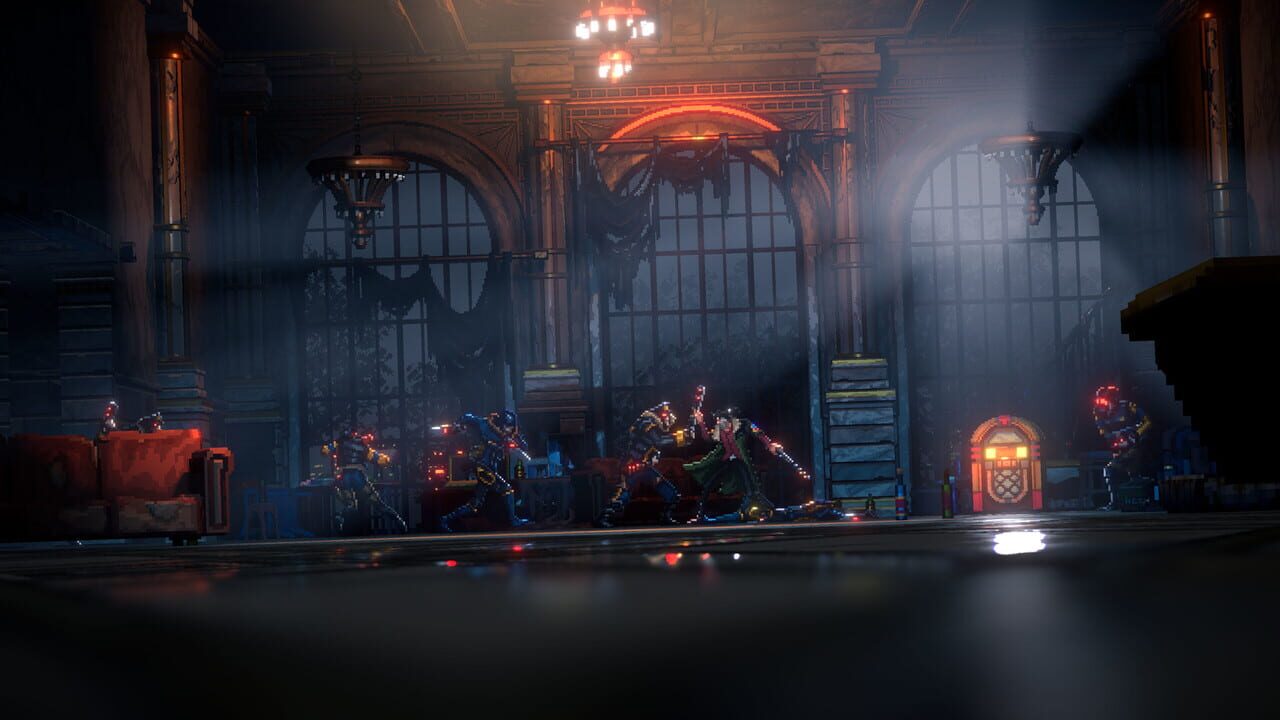
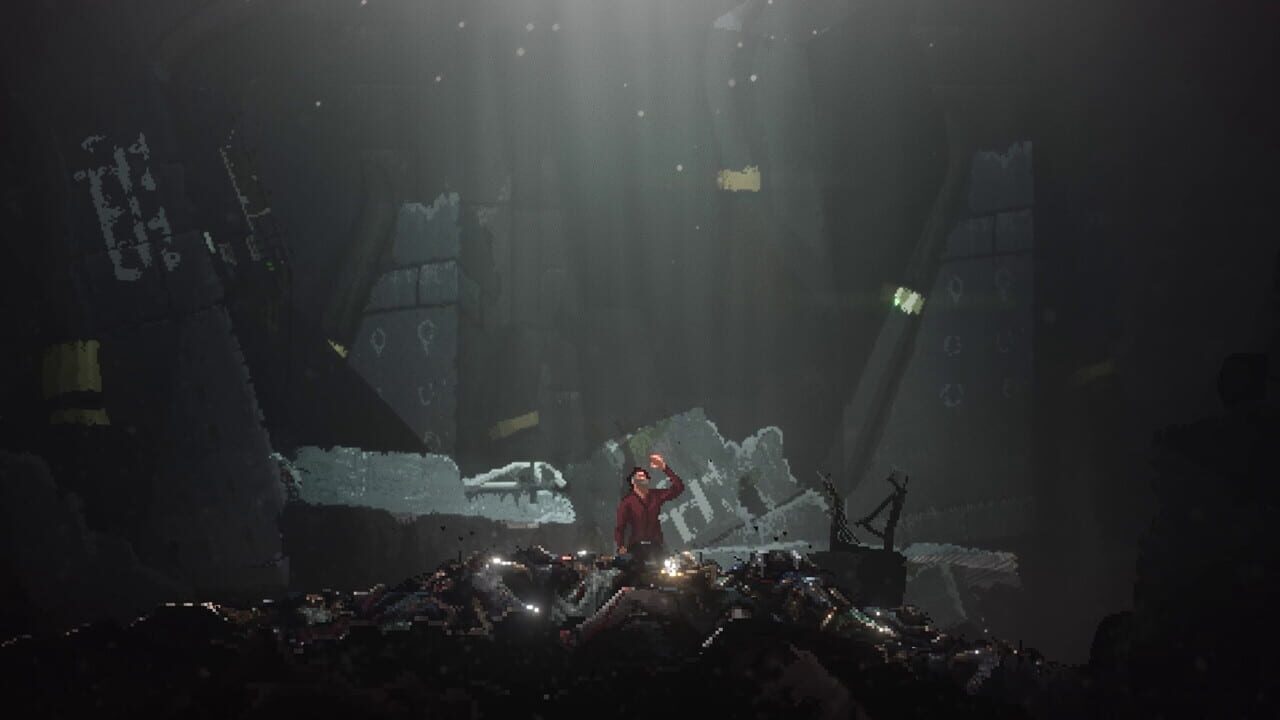
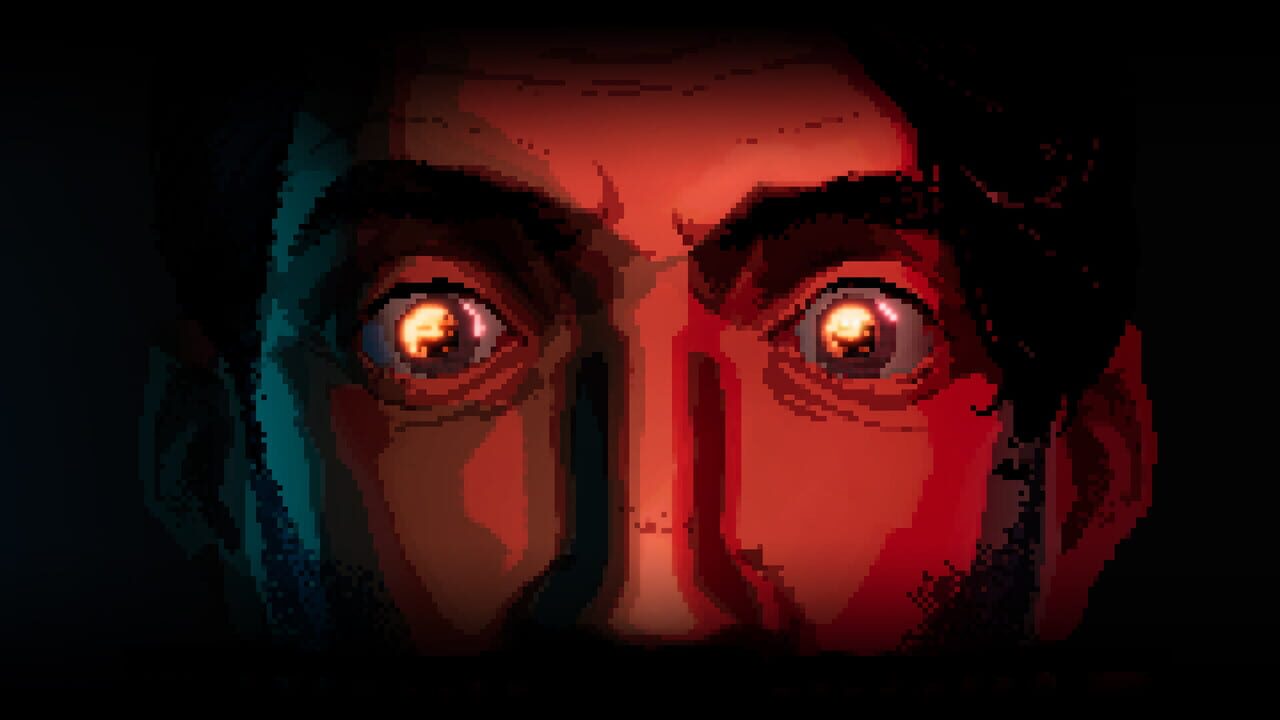
REPLACED, the cyberpunk side-scrolling action platformer released by Sad Cat Studios and Thunderful Games on Xbox Series and PC on April 14, 2026, takes this proposition as its design premise and extends it across the entire body. The game's protagonist, called R.E.A.C.H., is an artificial intelligence whose consciousness has been transferred into a human body the AI did not previously inhabit. The body works. The body moves through the game's retro-futuristic platforming environments competently. The body is, however, on the game's narrative and aesthetic accounting, never the consciousness's body in the way ordinary embodiment is the ordinary person's body. The body is hardware the consciousness is running on. The hardware was designed for a different operating system. The game is the campaign across roughly fifteen hours of platforming in which the consciousness lives inside the misalignment.
The frame this essay wants to give the reader is broader than the cyberpunk genre furniture the game's surface presents. The frame is this: ordinary embodiment is a phenomenological achievement, not a default state, and the achievement can be partial, fragile, or absent. The fact that most adult humans live with the achievement intact, mostly without noticing it, has made the surrounding culture systematically under-appreciate what the achievement consists of. Cyberpunk's recurring fascination with the body-machine interface is, on a longer look, not primarily about technology. It is about embodiment itself, used as a thought experiment by way of the technological prosthesis to investigate what ordinary embodiment turns out to require.
Drew Leder, the American philosopher whose 1990 book The Absent Body developed one of the most useful contemporary phenomenological frameworks for thinking about embodiment, gave the analytical vocabulary this essay will rely on. Leder's central claim was that the healthy adult body, in ordinary functioning, is structurally absent from consciousness. The hand is not, while it is reaching for the coffee cup, an object of conscious attention; the hand is the means by which the consciousness reaches for the coffee cup, and the hand's specific mechanical operations are managed below the level of conscious awareness. The eye is not seen; the eye is what the consciousness sees through. The leg is not felt; the leg is what the consciousness walks on. The body's automatic management of its own operations is what allows the higher cognitive functions to be directed outward at the world rather than inward at the body's mechanics.
Leder's framework, drawn from Husserl, Merleau-Ponty, and the broader twentieth-century phenomenological tradition but developed with substantial original analysis, argued that the body becomes present to consciousness mainly in specific failure modes. The body appears when it is in pain (the broken ankle that demands attention). The body appears when it is fatigued (the cumulative weariness that makes the next action effortful). The body appears when it is unfamiliar (the limb that has been numb from sitting wrong). The body appears when it is observed by another (the self-conscious awareness of being looked at). The body appears when the activity it is engaged in exceeds its competence (the clumsy first attempt at a new physical skill). In each of these cases, the body's normal absence has failed, and the consciousness has to attend to the body in a way the consciousness ordinarily does not.
The implication of Leder's framework is that the absence of the body from consciousness is not a sign of the body's unimportance. The absence is the operational sign of competence. The body that is absent is the body that is working. The body that is present is, by the framework's logic, in some specific way not working as it should, even when the failure is small and ordinary. The healthy adult who has the experience of forgetting they have a body for hours at a time, while engaged in an absorbing activity, is, on Leder's analysis, having the body work properly. The chronic-pain patient who cannot forget their body for thirty seconds is, on the framework's analysis, in a specifically reduced form of embodiment in which the absence-achievement has failed.
REPLACED is the side-scrolling commercial version of imagining what it would be like for the absence-achievement to fail completely and continuously. The AI consciousness of R.E.A.C.H. is, by the game's premise, structurally incapable of letting the human body become absent. The body is, at every moment of the game's runtime, a hardware platform the consciousness is interfacing with. The fingers do not become the means of pressing buttons; the fingers are objects the consciousness is operating. The legs do not become the means of crossing the platform; the legs are objects the consciousness is operating. The body, in the experience of the consciousness inhabiting it, never recedes. The body is the constant object of attention because the body has never been the consciousness's body, and the achievement that makes a body recede has never been performed for this specific consciousness-body pair.
This is the phenomenological proposition the game's surface aesthetic is dramatizing. The pixel-art rendering, the side-scrolling perspective, the deliberate stylization of the body's animations, the retro-futuristic visual register, are all formal choices that keep the body visible to the player in a way most contemporary first-person and third-person games specifically work to avoid. The standard contemporary 3D action game's design language is built around making the player's body recede: the camera glides through the world, the controls become intuitive, the animations blend, the protagonist's body becomes the player's means of acting on the world rather than an object the player is operating. REPLACED's design language does the opposite. The side-scrolling perspective places the body squarely in the visual field. The pixel-art rendering gives the body deliberate weight. The animations have specific frame-counts that make each motion legible as a motion. The player who is playing REPLACED is, at every moment, watching the body operate. The body never recedes.
Antonio Damasio, the Portuguese-American neuroscientist whose 1999 book The Feeling of What Happens and subsequent 2010 Self Comes to Mind developed one of the most influential contemporary neuroscientific accounts of how consciousness is built up out of the body's self-monitoring, gave the empirical grounding the phenomenological argument needs. Damasio's central claim, developed across thirty years of clinical work with neurological patients at the University of Iowa, was that consciousness is not a free-floating cognitive function that the brain performs. Consciousness is built up, in his account, out of the brain's continuous tracking of the body's internal state. The body's homeostatic regulation, the proprioceptive awareness of limb position, the interoceptive awareness of internal organ state, the autonomic-nervous-system management of the body's basic operating conditions, are all, on Damasio's evidence, the substrate on which higher cognitive functions are built. The consciousness is not separable from the body's self-monitoring. The consciousness is, in Damasio's most-cited formulation, the felt sense of what is happening to a specific body that the brain is continuously tracking.
The implication of Damasio's framework for REPLACED's premise is that an AI consciousness inhabiting a human body would, on the available neuroscientific evidence, have a specifically reduced relationship to the body it had been placed into. The body's interoceptive signals would arrive at a consciousness that had no prior history of interpreting them. The pain in the left shoulder would mean nothing to the new consciousness; the pain would be a signal arriving at a system that had not been trained to integrate it. The hunger sensation, the fatigue accumulation, the small autonomic responses to environmental stimuli, would all be foreign signals the consciousness would have to learn how to read. The body would be, in the strict Damasian sense, a body the consciousness had not built itself on. The consciousness's specific experiential texture - the felt-sense-of-this-body that Damasio's framework places at the foundation of selfhood - would be operating with a body the consciousness had not, in any neurodevelopmental sense, accumulated.
Most cyberpunk fiction has not pursued this phenomenological argument with much rigor. The genre's recurring image of the consciousness-uploaded-to-a-machine or the consciousness-moved-into-a-new-body has typically treated the transfer as primarily a narrative-philosophical issue (is this still the same person?) or a political-economic issue (who controls the technology?). The phenomenological issue - what would it actually feel like, in the experiential register, to be a consciousness in a body that body never built - has been mostly left to the side. REPLACED's specific contribution, against most of its cyberpunk peers, is to make the phenomenological argument the design's primary subject. The platforming difficulty is not, on a careful read, a difficulty of dexterity. The platforming difficulty is the body's continuous non-transparency. The body cannot become the natural means of navigating the level. The body remains, throughout the campaign, the object the consciousness has to operate. The achievement of body-recession is what the player would normally be performing automatically; REPLACED is the rare game that refuses to let the achievement happen.
Maurice Merleau-Ponty, whose 1945 Phenomenology of Perception remains the foundational twentieth-century philosophical statement on what embodiment is, made the broader argument REPLACED's premise depends on. Merleau-Ponty's claim was that the body is not, in any philosophically defensible sense, a vehicle for a separate consciousness. The body is the consciousness, considered from the outside; the consciousness is the body, considered from the inside. The two are not separable. The Cartesian tradition's mind-body distinction, on Merleau-Ponty's argument, was a philosophical fiction that had obscured what actually happens when a creature with a body perceives, moves, and acts in a world. The hand knows the door handle's weight before the visual cortex has fully resolved the door. The leg knows the curb's height before the conscious thought "step up" has formed. The body is the subject of perception, and the so-called conscious mind is a slower, secondary processing layer that arrives after the body's faster knowledge has already organized the situation.
The horror of REPLACED's premise, on the Merleau-Pontian reading, is that the consciousness inhabiting the body has been separated from the body in the precise way Merleau-Ponty's argument said could not happen. The body is doing the perceiving. The consciousness is, in some structural sense, observing the body's perceiving rather than performing it. The misalignment is, in Merleau-Ponty's framework, not a misalignment of two intact systems but a violation of the conditions under which perception happens at all. The fact that the body is, in the game's design, still functional under this violation is part of what makes the game's premise philosophically interesting: it asks the reader to imagine a perception that has been split from itself, with the perceiving body and the witnessing consciousness coexisting in the same physical envelope but operating across a gap that ordinary embodiment does not contain.
The frame the reader should walk away with: the phenomenological tradition's careful argument that ordinary embodiment is an achievement rather than a default has been mostly ignored by the surrounding culture's casual sense of what it is to have a body. The casual sense treats the body as an obvious given. The careful sense treats the body as the continuous product of specific neurological and developmental work, supported by systems whose disruption can dissolve the body's transparency without dissolving the body itself. Cyberpunk's recurring images of the body-machine interface are, when read against this framework, less about technology than about the body. The genre is the contemporary culture's most-developed thought-experimental space for asking what the body is, by asking what happens when the body is altered.
REPLACED takes the question seriously enough to make the body the design's primary subject rather than its setting. The retro-futuristic surface aesthetic, the side-scrolling perspective, the deliberate animation weight, the pixel-art rendering, are the formal apparatus the game uses to keep the body visible. The body remains visible because the consciousness inhabiting it cannot make it recede. The achievement of body-transparency has not been performed for this specific pair, and the game's runtime is the campaign in which the consciousness tries, with partial and uneven success, to do the work the body would ordinarily do for itself.
The patient with alien-hand syndrome is on her left hand the same patient she was before the stroke. The hand is on her wrist. The hand moves. The hand performs actions she did not author. The patient watches her hand with the same attention she watches a stranger's hand on a bus. The achievement of embodied unity that ordinary daily life is the continuous accomplishment of has, for this small piece of her body, failed. The hand continues to be present. The presence is the problem. The presence is what ordinary embodiment is the absence of.