In January 1960, Don Walsh and Jacques Piccard descended in a Swiss-built bathyscaphe called the Trieste to the bottom of the Challenger Deep in the western Pacific, nearly eleven kilometers below the surface. The descent took just under five hours. The pressure at the bottom was just over a thousand atmospheres, the temperature was a degree and a half above freezing, and the bathyscaphe's outer window cracked on the way down, releasing a small column of bubbles that the two men felt rather than saw. They sat on the floor of the trench for twenty minutes. They reported observing a flatfish, which the subsequent marine-biological community has gently disputed; what they certainly saw was a layer of pale sediment, a few hand-sized translucent organisms, and the specific quality of darkness that exists at a depth where no surface light has ever arrived. Then they began the ascent. They were the only human beings to reach the deepest point of the world's oceans until James Cameron, alone, repeated the dive in 2012.
This is the underlying cultural fact the medium has done very little with. The deep ocean is the largest unmapped continuous environment on the planet, larger than every land-surface and ice-sheet combined. It is harder to reach than the surface of Mars in practical terms, because the engineering required is more demanding and the political-economic reasons to go are weaker. The deep produces, in the human population that has thought about it, the specific aesthetic-emotional response that the contemporary psychology literature has converged on calling awe. It also produces, in the human bodies that approach it, a specific bodily-perceptual reorganization that the medium of the first-person video game is structurally well-positioned to render and has, with very few exceptions, declined to.
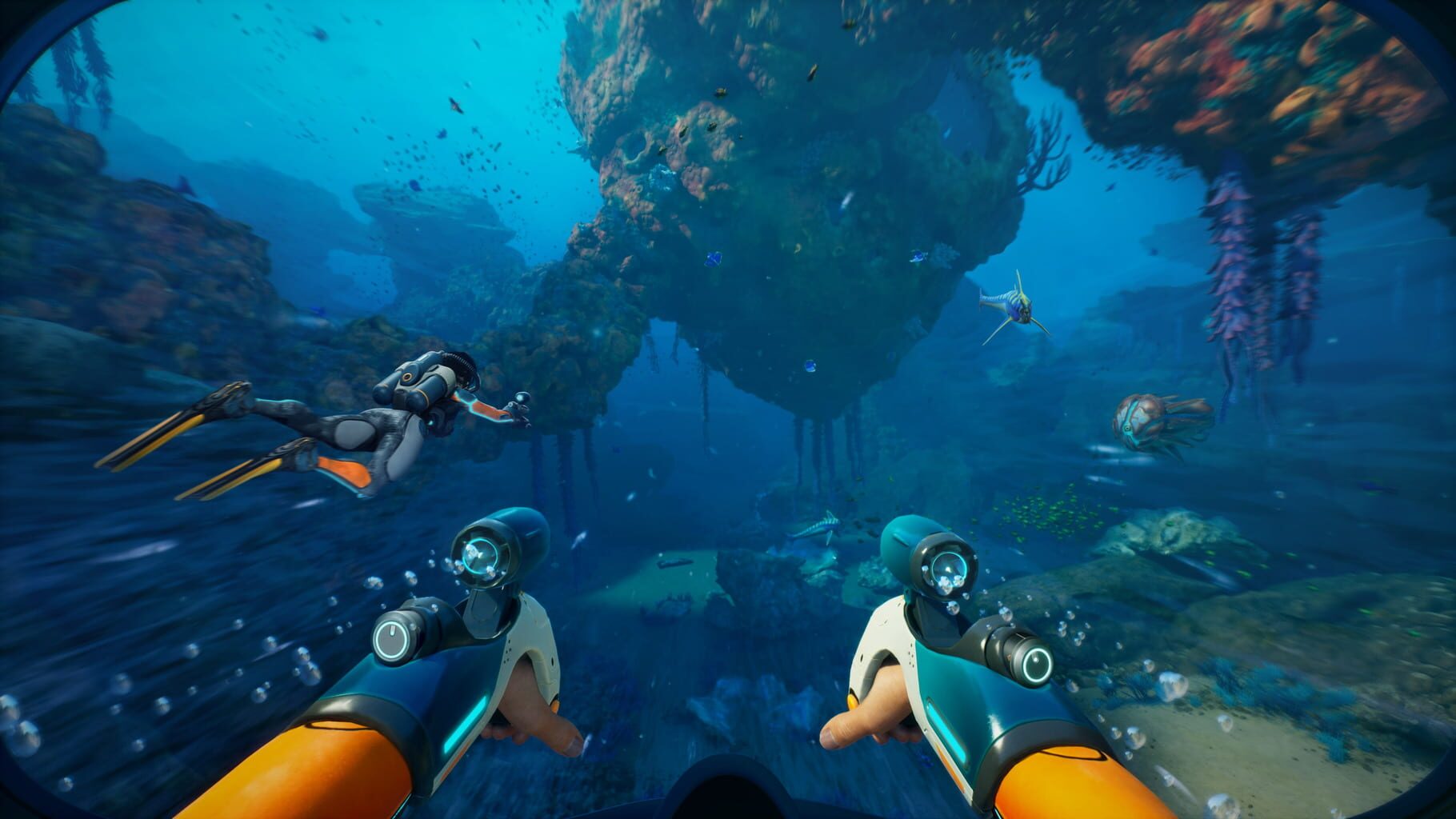
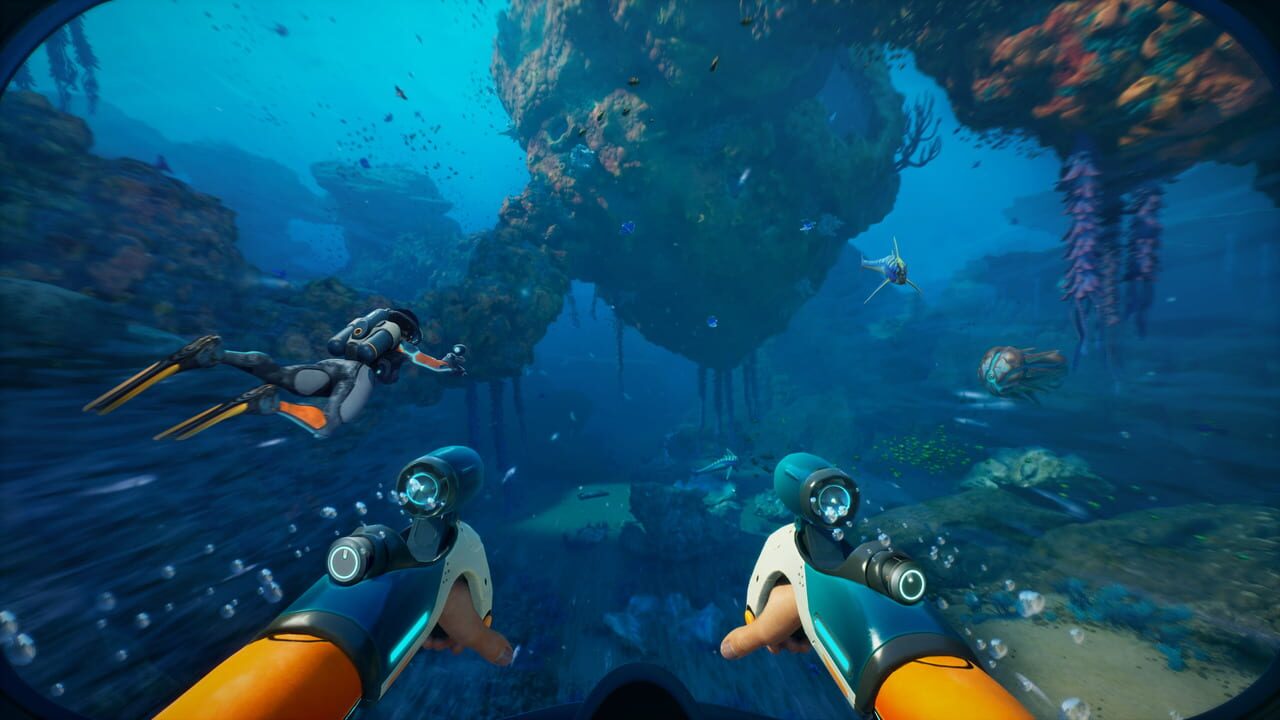
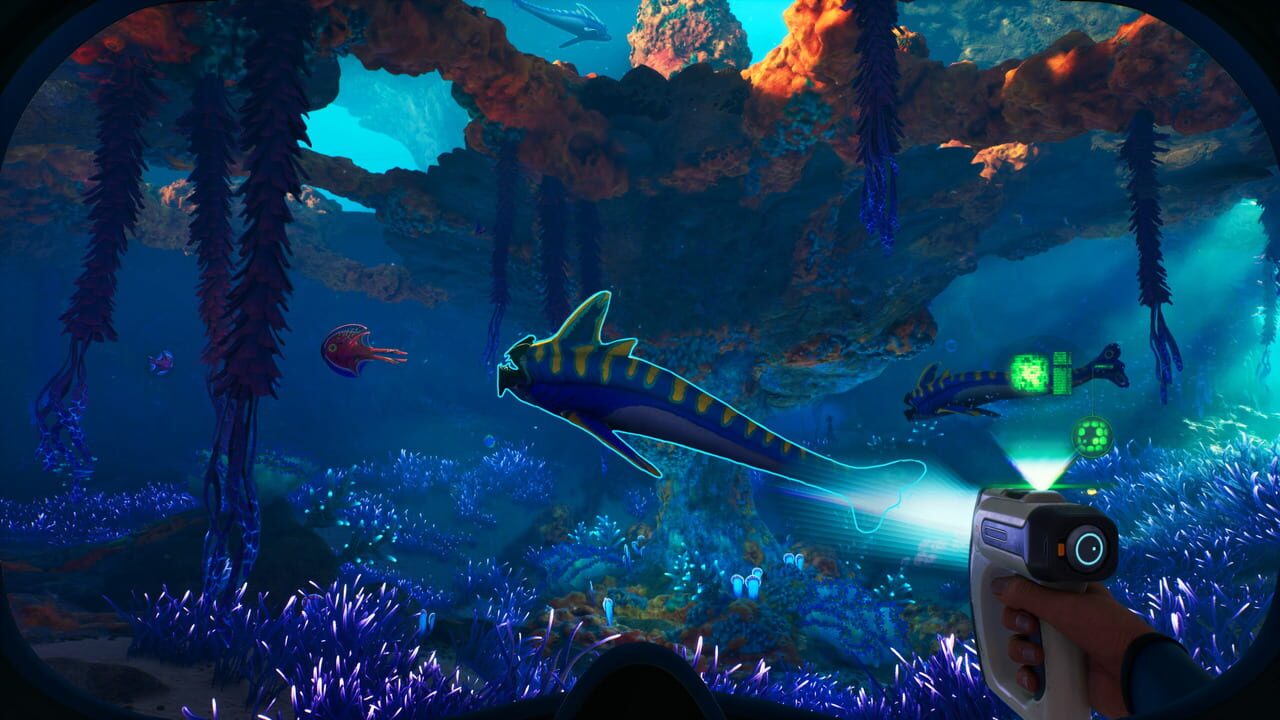
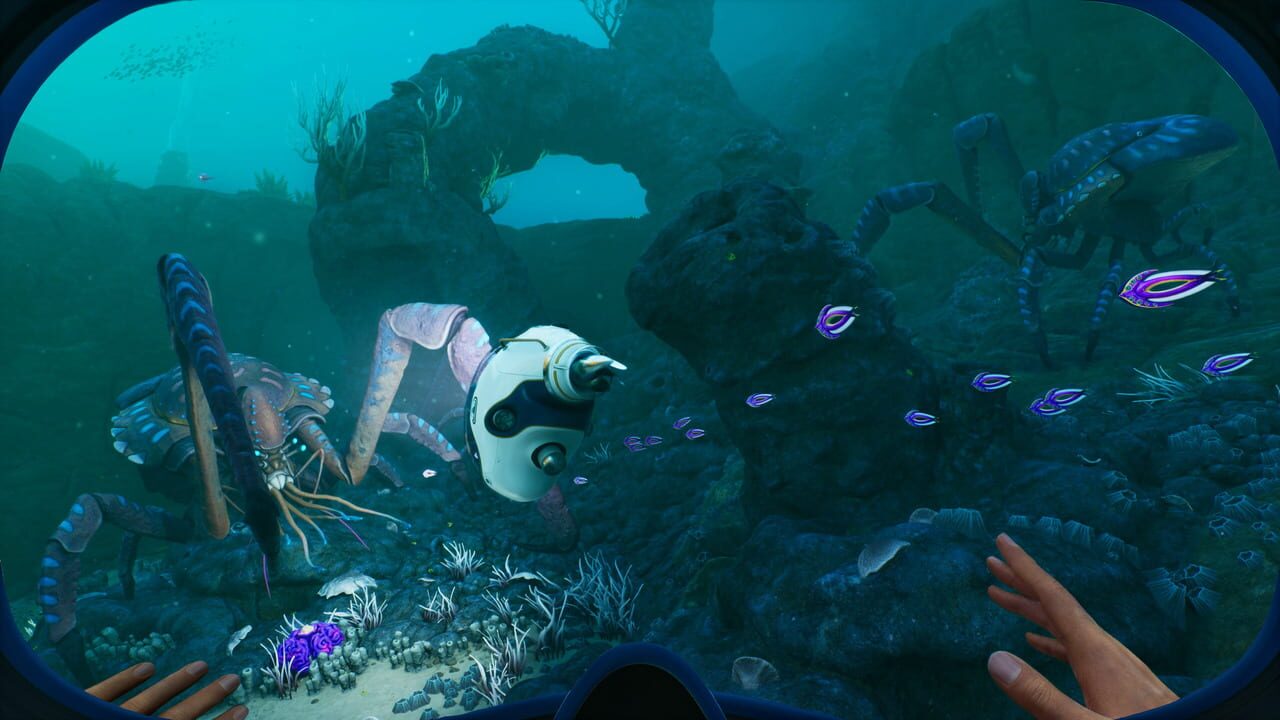
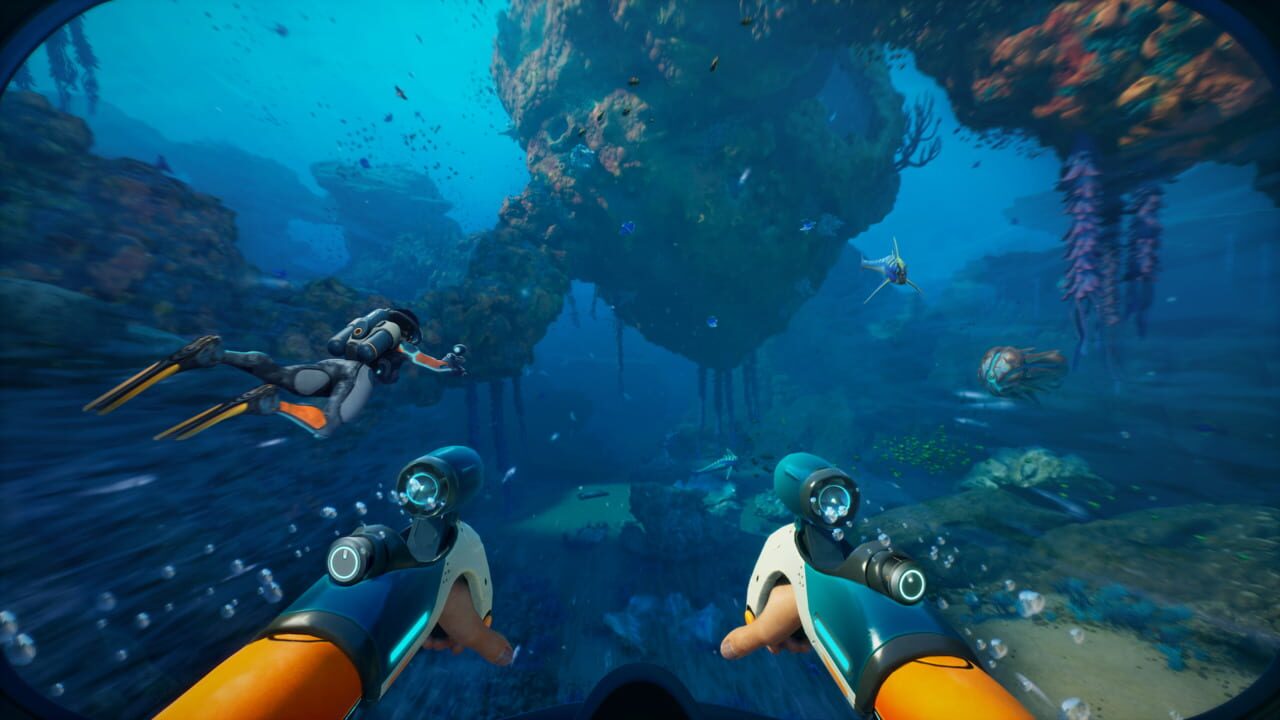
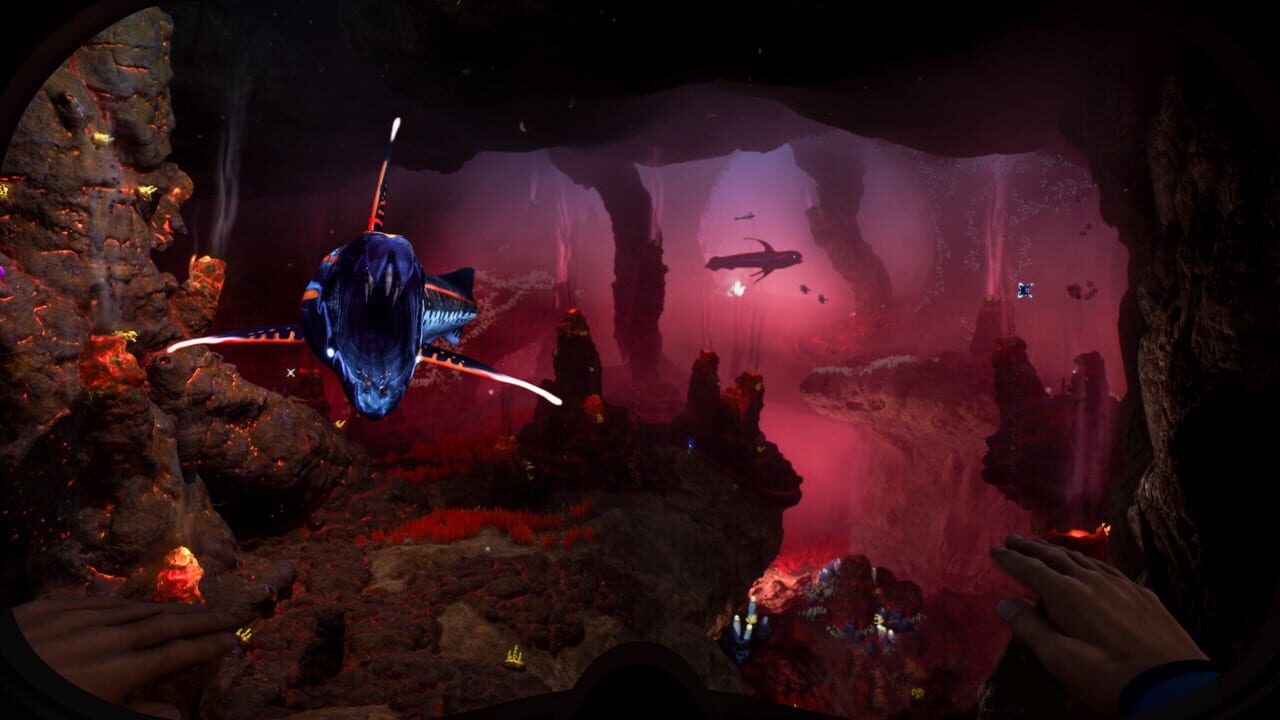
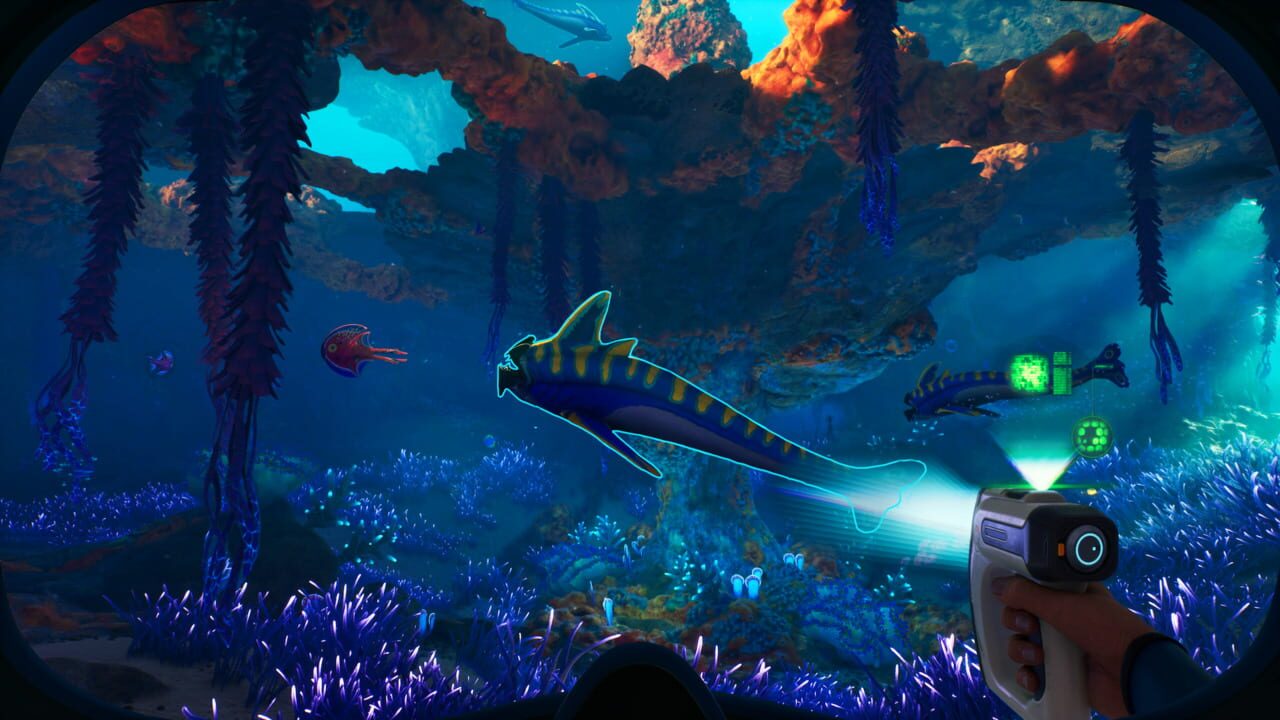
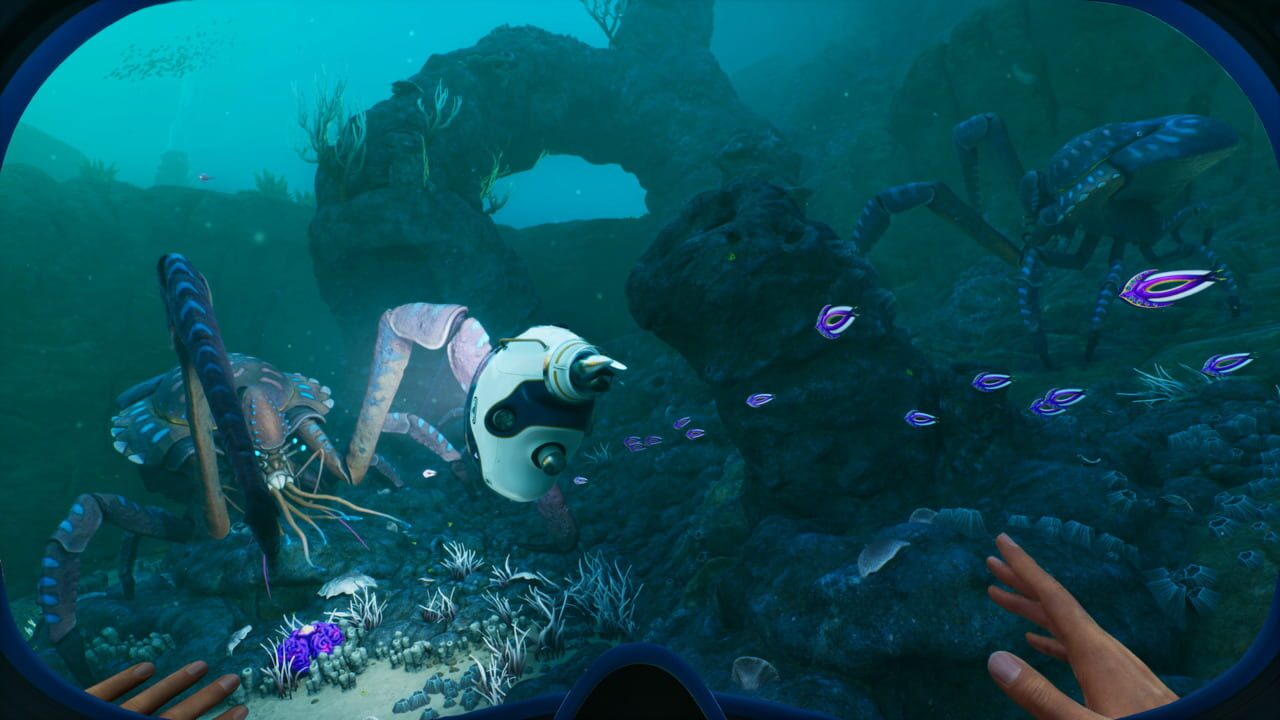
Subnautica 2, released by Unknown Worlds to early access in May 2026, is one of the exceptions. The franchise, beginning with the 2018 original and continuing through the 2021 Below Zero expansion, has been the medium's most sustained commitment to rendering the deep ocean as the primary axis of motion rather than as a setting through which mostly-horizontal motion happens. The new entry preserves that commitment and adds a multiplayer layer of up to four players, which on first inspection looks like a concession to the contemporary commercial pressure toward co-op and on closer inspection turns out to do something specific to the perceptual experience the original was producing.
The argument this essay wants to make is about the form, not just the game. The frame the reader should walk away with is this: most three-dimensional first-person games are horizontal-axis games whose verticality is decorative, navigable through occasional climbing or jumping, but not the primary plane on which the body moves. The body in the standard first-person game is structurally a body on land, optimized for forward-back and left-right motion, treating up-down as the third dimension rather than the first. Underwater games are the rare commercial category in which up-down is the first dimension. The experience this produces in the player is not what the horizontal-axis tradition has trained the player to expect, and the difference is what the franchise has been quietly making available for eight years.
Gaston Bachelard, the French philosopher of science whose 1958 The Poetics of Space remains the foundational work on how human bodies inhabit specific spatial categories phenomenologically rather than geometrically, made the framework this analysis will rely on. Bachelard's project was to argue that the philosophical tradition's treatment of space as a neutral mathematical container - three dimensions, isotropic, indifferent to the body - was a culturally specific construction rather than a description of how human beings actually experience space. The body, in Bachelard's account, lives inside spaces that have specific affective qualities. The house has rooms that mean specific things. The cellar is not just the lower part of the house; the cellar is the affective category of buried, dark, and irrational, with all the symbolic weight that combination carries. The attic is not just the upper part; the attic is reason, light, and elevation, organized around the body's ascent. The vertical axis is, in Bachelard's framework, not symmetrical. Going up and going down are different operations with different bodily-emotional valences. The body knows this even when the conscious mind has not registered it.
Bachelard wrote little directly about the ocean, but his framework extends naturally. The depths are an extreme case of the cellar category. They are buried, dark, irrational, and additionally indifferent - the cellar at least belonged to a house someone built; the deep ocean belongs to itself. The depths produce, in the bodies that approach them, a particular variant of the cellar-affect that Bachelard's analysis was identifying: heightened, organized around the awareness that the body's evolutionary equipment is structurally inadequate to the environment, defended only by tools the body did not grow.
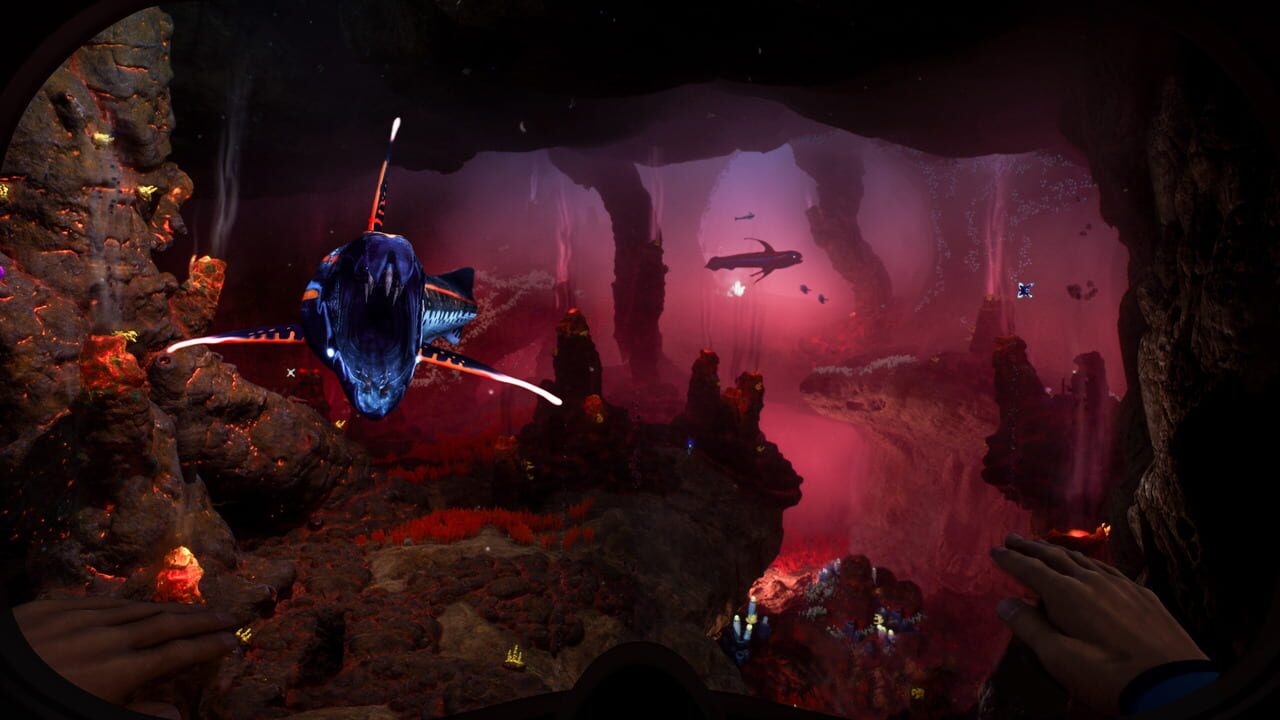
What the first Subnautica game accomplished, on this Bachelardian reading, was the most thorough commercial commitment to rendering the depth-affect that the medium had produced. The game's vertical mechanics were not decorative. The player's body - the rebreather, the oxygen meter, the swim speed at different gravity-equivalent depths - was calibrated to make the descent the activity. The horizontal motion was real but secondary; the diving was the primary verb. The map's organization rewarded descent: the surface was relatively safe and aesthetically calm, the shallow biomes were beautiful and threat-light, and as the player descended each subsequent layer added unfamiliar life, sharper hazards, deeper darkness, and the specific quality of pressure that the design used to gate progression. The player who refused to go down would never finish the game. The player who went down was working through the depth-affect at the pace the design required.
Dacher Keltner and Jonathan Haidt, in their 2003 paper Approaching Awe, gave the contemporary psychology of emotion its most-cited theoretical framework for what the deep ocean produces in the human nervous system. Awe, in their account, is a discrete emotion organized around two features: perceived vastness and the need for accommodation. Vastness can be physical (a mountain range, a starry sky, a cathedral interior) or conceptual (a mathematical proof, a piece of music, a moral revelation). Accommodation is the cognitive process by which the mind has to adjust its existing categories because the stimulus exceeds them. Awe, on Keltner's subsequent research at Berkeley and at the related labs, is a real emotion with its own neurological signature, its own behavioral correlates, and its own measurable physiological effects. The lab has documented, across many experimental studies between 2003 and the present, that brief experiences of awe produce reductions in self-focused attention, increases in prosocial behavior, and a specific quality of cognitive openness the surrounding emotional environment had not been producing.
The deep ocean is awe's strongest available natural case. It is vast in the physical sense; it requires accommodation in the conceptual sense, because the surface-dwelling mind that approaches it has to revise its categories about scale, time, life, and danger before the encounter can be metabolized. The cultural objects that have rendered the deep at all - Rachel Carson's The Sea Around Us (1951), the Cousteau films, the BBC's Blue Planet documentaries, Werner Herzog's Encounters at the End of the World (2007) - have done so in registers that allow the audience to occupy the awe position without having to defend the body the awe is being delivered to. The reader of Carson can be awed in an armchair. The viewer of Cousteau can be awed in a cinema. The body remains land-based and safe; the awe is delivered indirectly.
The first-person game changes this. The body in the first-person game is, perceptually, the player's body. The eye is the player's eye. The sounds in the headset are the sounds the body would be hearing if the body were where the game places it. The awe the deep produces, when the deep is rendered in first-person with the player's body submerged in it, is awe with the body in the position of the awed thing, not awe with the body watching the awed thing through a frame. This is rare. The medium has not produced very many of these objects. Subnautica is, in the commercial register, the most accomplished one.
This is the point at which the new game's multiplayer layer becomes interesting, because the standard objection to multiplayer in this kind of game is that it dilutes the solitude that the depth-affect depends on. The objection has merit. Solo descent and group descent are different operations. The franchise's first audience, encountering the original Subnautica in 2018, was experiencing the depth alone, and the solitude was part of what the game's design was leveraging.
What the second game's co-op layer does, on a careful reading, is not eliminate the depth-affect but socialize one specific component of it. The component is the interpretive labor of orienting in a vertical world. The horizontal-axis first-person game does not require much interpretive labor; the body's evolutionary equipment for horizontal motion handles the orientation work pre-consciously. The vertical-axis first-person game requires interpretive labor that the body does not have native equipment for. The diver in the dark has to reason about depth, about ascent rate, about oxygen budget, about whether the shadow below is rising or falling, about which way is up when the only available cues are kinetic. This reasoning happens in the conscious mind, on a faster timescale than the body's automatic orientation systems run at, and the cognitive cost is one of the things that makes the game's solo register feel demanding in a way few first-person games feel.
Two divers in the dark distribute the interpretive labor. They can disagree about what direction is up. They can compare interpretations of a shape in the distance. They can negotiate, in real time, what the situation is. The awe component is not gone - the depth is still vast, the body is still in the depth - but the interpretive component, which was being processed alone in the solo game, is now a small social fact. The fear changes shape. The negotiation is part of how the depth is registered. The depth, in the multiplayer register, is being read by a small social organism rather than by a single perceptual system.
This is what awe-with-other-people is, on the Keltner literature's subsequent research. The lab's later work has documented that shared awe experiences produce specific cognitive and social effects that solo awe does not produce. Shared awe is, on the available evidence, more durable in memory. It is more available later as a frame the experiencer can return to. The mountain you climbed alone is one thing; the mountain you climbed with three people is a different cultural-cognitive object, and the difference is not a dilution. The difference is a translation. The awe has been translated from a private experience into a small shared one. Both versions are real. Both versions have specific cognitive properties. The Subnautica franchise has, with the second entry, decided to make the translated version available alongside the private one.
This deserves to be named because the reflexive critical response to commercial multiplayer additions in single-player franchises has, over the last decade, been mostly negative. The negativity has been earned in many specific cases: a lot of multiplayer additions have been transparent commercial moves that dilute the form for engagement-extraction reasons. The Subnautica 2 multiplayer does not look, on the available evidence, like one of those cases. The four-player ceiling is small. The systems that organize the multiplayer are continuous with the single-player systems. The base-building does not become a guild-management subgame; it remains, in the small social shape of three or four people, the same activity it was in the solo game, with the addition that the small social organism is doing the work instead of the lone player. This is the kind of multiplayer that takes the form seriously enough not to break it. There are not many of these. Sea of Thieves, in its better moments. Deep Rock Galactic. Phasmophobia, before its later content updates. Most other recent multiplayer additions to single-player-coded franchises have been less restrained.
Helen Rozwadowski, the maritime historian whose 2005 Fathoming the Ocean documented the cultural-historical process by which the deep ocean became a recognized object of scientific and aesthetic attention in the nineteenth and twentieth centuries, made an argument that is worth registering here. Rozwadowski's claim was that the deep was, until roughly 1850, not a stable cultural object at all. The deep was a category that had been theologically and folklorically loaded for centuries but had no scientific, aesthetic, or political content. The construction of the deep as a real place that real people could think about took a specific institutional history: the Challenger expedition of 1872 to 1876, the development of sounding technologies, the emergence of marine biology, the cultural-popular reception of the work in mass-market publications, the slow construction of an audience that could experience the deep as an aesthetic and scientific object.
The construction is still ongoing. The deep is, in the cultural imaginary of 2026, a more substantial object than it was in 2018 when the original Subnautica released, partly because of the specific cultural work the original game did. Most of the franchise's audience, on the available evidence, has not been diving. The franchise's depth-affect is, for most of its audience, the depth-affect they have, and it is, in some real measurable sense, contributing to the cultural construction of the deep as an emotional object. This is the kind of cultural work that mass-market games occasionally do without anyone naming it. The franchise has been doing it for eight years. The new entry continues the work, in a register that adds the social dimension of awe to the existing solo dimension, without doing damage to either.
The frame the reader should carry: when a first-person 3D game commits to verticality as the primary axis of motion, the resulting experience engages cognitive systems that the horizontal-axis tradition has not been engaging. The body in the vertical world is doing interpretive labor the body in the horizontal world does not need to do. The labor is part of what makes the experience feel different from other first-person games, and part of why the experience can produce the awe response that the surface-walking tradition has rarely accessed. Notice, when a game places its body in water, in space, in a chasm, in a cathedral, what axis the design is committing to. The commitment is rarely advertised. The commitment is in the design.
Subnautica 2 is the franchise's third entry and the form's clearest current commercial example. The depth still goes down. The body still descends. The light fails at the same depth the light fails at on the actual Earth ocean, because Unknown Worlds has bothered to calibrate the rendering against the real photic-aphotic boundary. The unfamiliar life still organizes itself into the layered biomes the original established. The multiplayer adds three other small bodies somewhere in the water nearby, whose lights show in peripheral vision, whose voice or text-chat negotiations make the interpretive labor a social fact. The body keeps descending. The descent keeps being the activity. The depth, against its eight years of patient cultural work, keeps doing what the depth was always going to do to the body that took the trouble to enter it.