



The four-year-old has lined up six plastic figures on the windowsill. Two of the figures are stuffed bears with slightly different fur. One is a small wooden horse. Two are action figures from television shows whose specific identities the child has decided not to honor; the figures are no longer the characters they were sold as. The sixth figure is a piece of LEGO with a face drawn on it in marker. The figures are arranged in a specific spatial pattern. The pattern is, on careful observation by the developmental psychologist who has spent twenty years studying this kind of arrangement, a social configuration: the bears are sitting together because they are friends, the horse is at one end because the horse is the new one, the LEGO is at the other end because the LEGO is the one nobody is talking to today. The child is narrating quietly. The narration is not aimed at any audience; the child is, in the technical vocabulary the field has settled on, conducting fantasy play of the kind that has been documented in every human culture that has been examined for it, in every generation since the developmental field has had instruments for the observation, and at every age between roughly two and roughly eight before the cultural conditioning that calls play embarrassing begins to take hold.
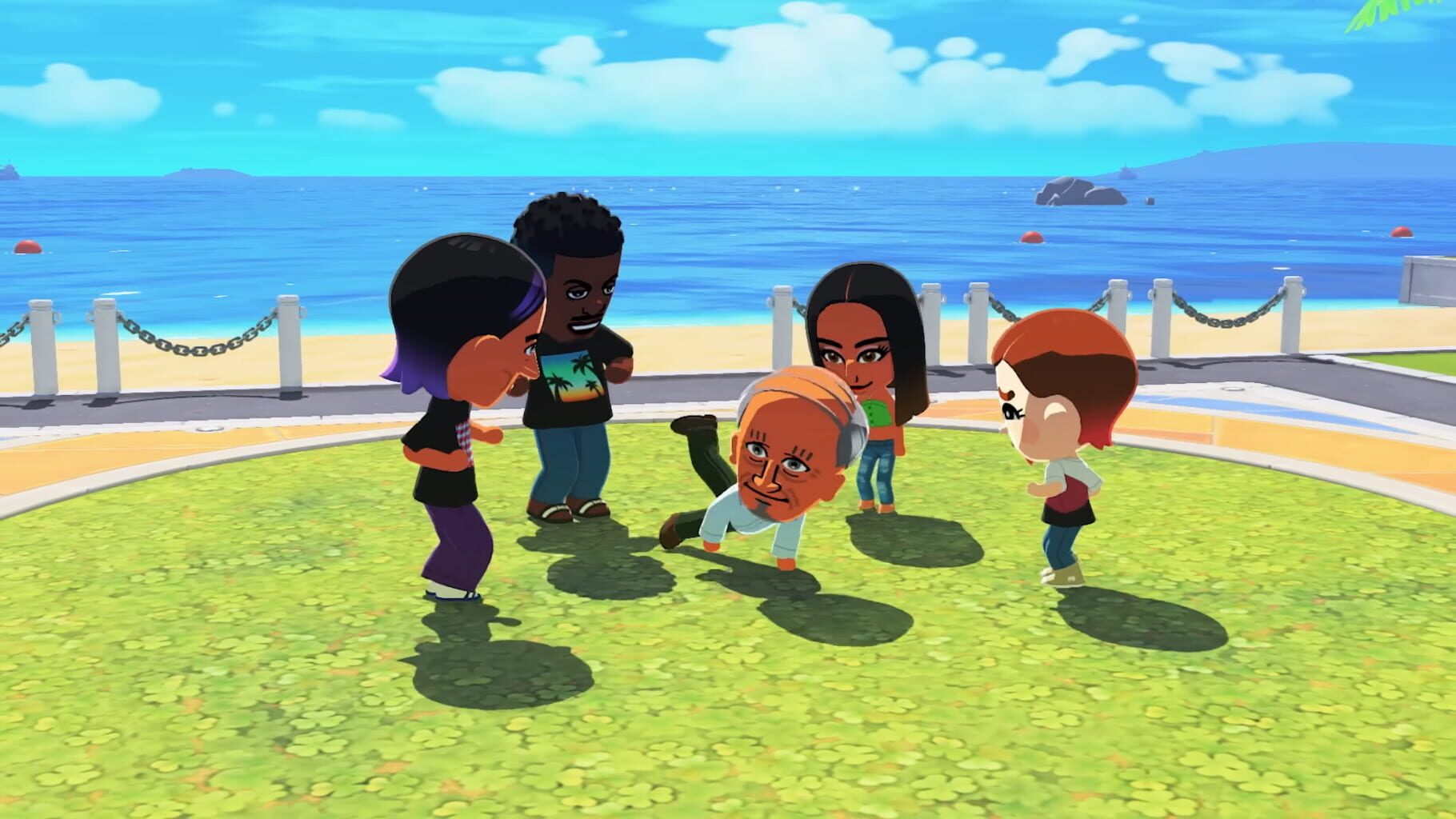
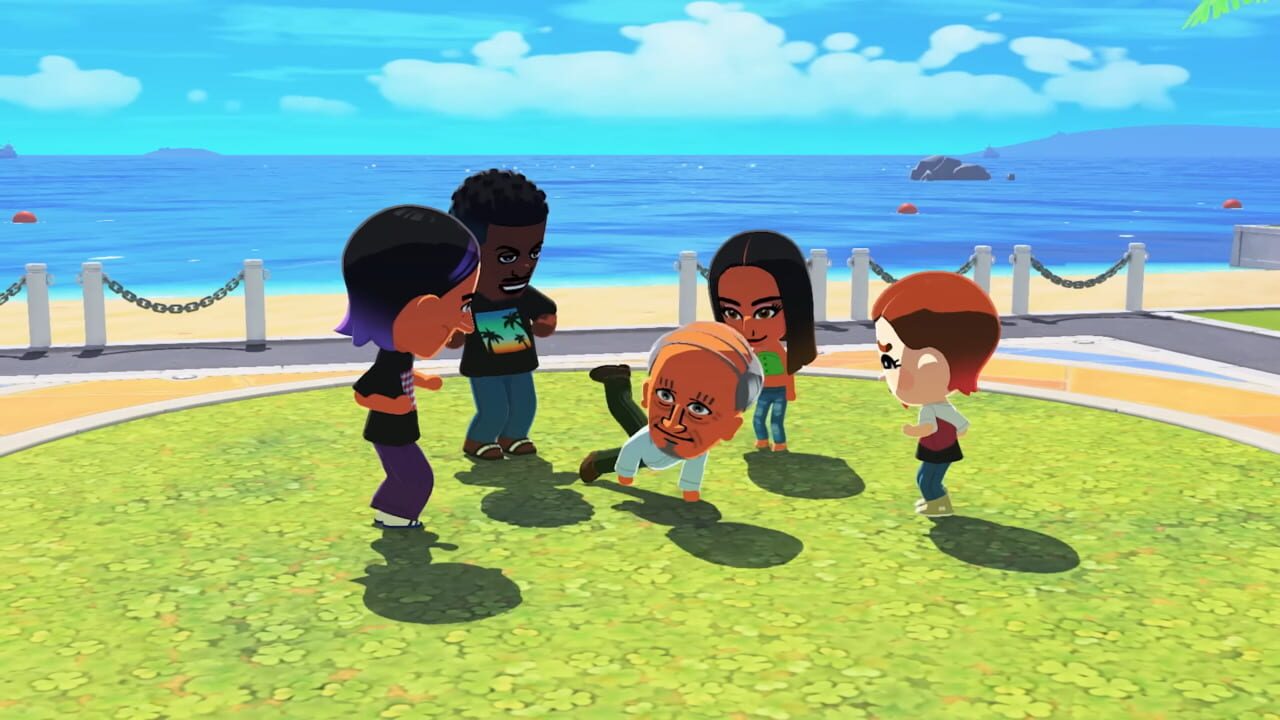
This is what Tomodachi Life: Living the Dream - released by Nintendo on Switch on April 16, 2026, the third major entry in a small Nintendo franchise dating to the 2009 Japan-only Tomodachi Collection and its 2013 English-language expansion - is the commercial adult form of. The player creates Mii characters, often modeled on family members, friends, partners, coworkers, celebrities, fictional characters, or invented people. The Miis live on a small island. The Miis have relationships, conflicts, romances, dietary preferences, sleep schedules, friendships, and small daily emergencies. The player observes, intervenes when invited, decorates the apartments, manages the small commercial economy, and accumulates, over the course of weeks or months, a small chaotic society whose specific contents nobody could have authored in advance, including the player who set the initial conditions. The system's voice synthesizer makes every Mii sound, when speaking, like a robot that has been taught to perform sincerity slightly badly. The cumulative effect is a small chaos that is reliably funny and unreliably touching and, on a careful look, doing exactly the kind of cognitive work the four-year-old on the windowsill is doing.
The frame this essay wants to give the reader is broader than the game. Doll play, narrative fantasy play, and the practice of running small fictional figures through imagined social configurations is one of the most-studied cognitive practices in developmental psychology and one of the least-respected cognitive practices in adult life. The contemporary cultural conditioning around it is asymmetrical: a child playing with dolls is engaged in important developmental work, and the adult literature on child play has been extensive and serious; an adult playing with dolls is, in the surrounding culture's standard reading, doing something either embarrassing or developmentally arrested. The asymmetry is not, on the available cognitive-science evidence, supported by the underlying psychology. The play practice does not stop being useful at age eight. The play practice continues to do useful cognitive work across adult life, in any form the adult finds available, and the adult forms have historically been fewer than the child forms because the surrounding culture has not given the adult forms permission to exist openly. The Tomodachi franchise is one of the small commercial exceptions. The game's surface absurdity - the simple Mii faces, the robotic voices, the comic relationship dramas - is, on a longer look, the form's design rather than its failure. The absurdity is what gives the adult player permission to engage in the practice without the embarrassment the surrounding culture would otherwise impose.
D. W. Winnicott, the British pediatrician and psychoanalyst whose 1971 book Playing and Reality consolidated three decades of clinical work with children and their families, gave the foundational framework for what this kind of play is. Winnicott's central concept was the transitional object - the teddy bear, the security blanket, the specific stuffed animal the child cannot sleep without. Winnicott's argument was that the transitional object is not, in the casual reading, just a comfort item. It is, in the technical reading, the child's first navigated relationship to the conceptual zone between me and not-me. The transitional object is partly the child (the child has made it meaningful through repeated handling, has assigned it character, can imagine its preferences and reactions) and partly not the child (it has a physical existence the child did not invent, it persists when the child is not paying attention, it has properties the child has to accommodate to). The zone between me and not-me, in Winnicott's developmental account, is where the child first practices the relationship to the world as a whole. Play happens in this zone. Cultural life, in Winnicott's expanded later argument, also happens in this zone. The novel, the film, the painting, the religious ritual, the friendship, the marriage, are all, on Winnicott's reading, instances of the cultural-life version of the same zone the child first navigated through the transitional object.
The implication of Winnicott's framework is that the practice of engaging with cultural objects through the me/not-me zone is not optional adult equipment. It is the foundation of how human beings produce meaning at all. The cultural objects that allow the practice to continue across adulthood - the books, the films, the games, the songs, the relationships - are not entertainments in the trivial sense. They are the operational substrate of how an adult continues to do the cognitive work of being a person in relation to a world they did not invent.
Tomodachi Life, in this Winnicottian reading, is the medium's most direct commercial commitment to the play practice in its pure form. The Mii of the player's mother is not the player's mother. The Mii of the player's mother is also not nothing; it has the player's mother's name, an approximation of her face, the player's choice of her voice and personality preferences, and it does things the player did not specifically author the Mii to do. The Mii is, structurally, a transitional object in Winnicott's strict sense. The player who has set up the Mii of their mother and watched the Mii develop relationships on the island is practicing, in the small specific way the form allows, the me/not-me zone in relation to the player's actual mother. The play is not the player's mother and the play is not the player; the play is the zone in between, where the player is doing the cognitive work that adult relationship requires and that the surrounding culture has provided few socially-sanctioned forms for doing.
Roger Caillois, the French sociologist whose 1958 book Les Jeux et les Hommes developed one of the more useful contemporary taxonomies of play, gave the framework for what kind of play this is, specifically. Caillois divided play into four basic categories: agon (competition, where the outcome depends on skill), alea (chance, where the outcome depends on luck), mimicry (the practice of being something one is not), and ilinx (vertigo, the pleasure of altered perception). The four categories, in Caillois's argument, are roughly comprehensive of what humans do when they play, and most actual play activities are combinations of two or more of the categories operating together.
Tomodachi Life is, almost in its entirety, in the mimicry category. There is no competition. There is no chance the player can structure as gambling. There is no vertigo. The pleasure is the pleasure of being something one is not, or of watching something be something one knows what it is. The Miis are mimicry-objects. The player who puts their best friend into the game is engaged in the play of being the best friend, briefly, in the sense that the Mii's small choices and responses become readable to the player as the best friend's small choices and responses. The player who puts a celebrity into the game is engaged in the play of running the celebrity through an island configuration the celebrity never agreed to participate in. The player who invents a Mii from scratch is doing the more interior version of the same mimicry - being the inventor of a character whose preferences and tics the player will, over time, learn as if they belonged to a real person.
Caillois's argument was that mimicry-play is structurally important to adult human cultural life in ways most other play categories are not. Agon gives rise to sport. Alea gives rise to gambling. Mimicry gives rise to theater, fiction, film, ritual, and most of what counts as adult cultural production. The mimicry-play impulse is the substrate on which the cultural traditions of acting, storytelling, religious enactment, and identity-formation are built. The fact that mimicry play has been allowed to continue across adulthood in some forms (theater, fiction, costume parties, role-playing of various kinds) and not in others (doll play, specifically) is, on Caillois's longer argument, a culturally specific accident of the modern Western adult's relationship to play, not a developmental necessity.
This is the part of the analysis that lets the surrounding cultural conversation about Tomodachi Life be re-framed. The game has been received, across its three entries, as a small Nintendo curiosity, mostly charming, occasionally viral, structurally underestimated. The most-cited critical responses across the years have been some version of the game is weird and I do not know what to do with it. The bewilderment is, on the framework this essay is developing, partly the framework's fault. The form is doing something the contemporary adult-criticism vocabulary has not been equipped to recognize. The form is not, primarily, simulating people; it is providing the contemporary adult with one of the small commercial forms in which mimicry-play continues to be socially permitted. The adult does not have to acknowledge that they are doing mimicry-play in any serious sense. The surface absurdity of the form is the cover under which the play happens.
Sherry Turkle's work on what she calls evocative objects - the things in adult life that carry meaning beyond their utilitarian function - gives the contemporary frame for why this matters. Turkle's argument, developed across several decades of fieldwork at MIT and elsewhere, is that adult cognitive life is partly assembled from the small objects the adult has developed relationships to: the specific desk, the specific book on the shelf, the specific computer, the specific small possession that has accumulated meaning across years of use. The objects are evocative because they have been participants in the adult's cognitive life. They have, in a real sense, helped do the thinking. The contemporary critical conversation about the relationship between adults and digital objects has been mostly anxious - the smartphone, the social-media account, the AI assistant, all framed as threats to authentic adult cognition. Turkle's own later work has been substantially anxious in this register, and the anxiety is not unfounded. The earlier work, however, made the more interesting argument: digital objects can be evocative in the same way physical objects can be. The Mii of the player's mother is, on Turkle's earlier framework, an evocative object. It is doing the work evocative objects do: it is helping the player think about their mother in a small structured way, on a schedule the player chooses, in a form the player can stop and resume.
There is a small sardonic observation worth registering, because the surrounding cultural conversation about adult engagement with this kind of game has been, on the available evidence, more embarrassed than it needs to be. Tomodachi Life and its predecessors have produced, across nearly two decades, some of the most-watched casual-gaming YouTube content the medium has seen. Adults film themselves putting their families into the game, putting celebrities into the game, putting fictional characters into the game, putting themselves in. They narrate the resulting small social comedies. The audience laughs. The audience is, in a substantial fraction of cases, doing it themselves at home off-camera, without the social cover the recording provides. The cultural fact of millions of adults playing dolls with a Nintendo product on their televisions in the evenings is, on the developmental-psychology evidence, mostly fine. The cultural fact of the surrounding adult-culture being unable to talk about this in any register other than self-deprecation or irony is the part that deserves notice. The play is not the embarrassment. The cultural prohibition against the play is the embarrassment.
The 2014 controversy around the original Tomodachi Life's English release deserves brief notice because it intersects with the same cultural-cognitive issue. The game, as released in Japan, allowed Mii relationships only in male-female pairings. The Western reception correctly identified this as a problem that did not have to be a problem - the system permitting same-sex Mii relationships would have required no additional design work - and Nintendo, after substantial criticism, acknowledged the omission and committed to addressing it in subsequent entries. The 2026 entry, on the available evidence, permits the full range of Mii relationships without restriction. The episode is worth registering because it demonstrated that adult engagement with the play form was serious enough to produce political consequences when the form excluded particular adult populations from the play. The play matters. The play matters in ways that produced a real policy response. The cultural conversation that had been treating the form as trivial was, in retrospect, treating it less seriously than the players themselves were treating it.
The frame the reader should walk away with: when a commercial product invites the player to populate a small system with figures that reference real people in the player's life, the activity is not, in any meaningful sense, just play. The activity is the adult form of a cognitive practice that the developmental literature has spent a century documenting in children. The practice does useful cognitive and social work. The work is mostly hidden from the surrounding adult-cultural conversation because the conversation has not produced the vocabularies for recognizing it. Notice, when the next life-sim or character-creation-driven game arrives, what specific kinds of mimicry-play the design is making available. The choices are usually more thoughtful than the marketing copy admits, and the play, even at its silliest, is doing work the surrounding cultural environment has been progressively forgetting how to honor.
The Mii of the player's coworker has, on the island, started seeing the Mii of the player's high school friend. The two Miis live three apartments apart. They will, on the system's current schedule, have a small relationship-defining moment in roughly forty-five minutes of play time. The player has nothing to do with what is about to happen. The player has, in the small structural way the form permits, set the conditions under which what is about to happen could happen, and has accepted that what happens next will not be the player's authorship. The acceptance is part of the play. The play is part of how adult cognition keeps doing the work the surrounding culture has stopped being able to make visible. The island continues. The robot voices continue. The work continues.