In the working vocabulary of intelligence services, the word for a deep-cover agent's fabricated identity is a legend. A legend is not a forged passport. It is a life: a full biography, a childhood, a hometown with streets the agent can describe in the right order, schools, a first job, a dead grandmother, an unembarrassing reason for the eighteen-month gap in employment. The service builds it, document by document, and the agent then learns it the way an actor learns a part, except that the actor goes home at the end of the run and the agent does not. A legend that works is one the agent can be woken from deep sleep and made to recite - frightened, drunk, in pain - without a seam showing, because the cost of a visible seam, depending on the posting, is the agent's life. The legend is the agent's actual work. The work is the maintenance of a person who does not exist.
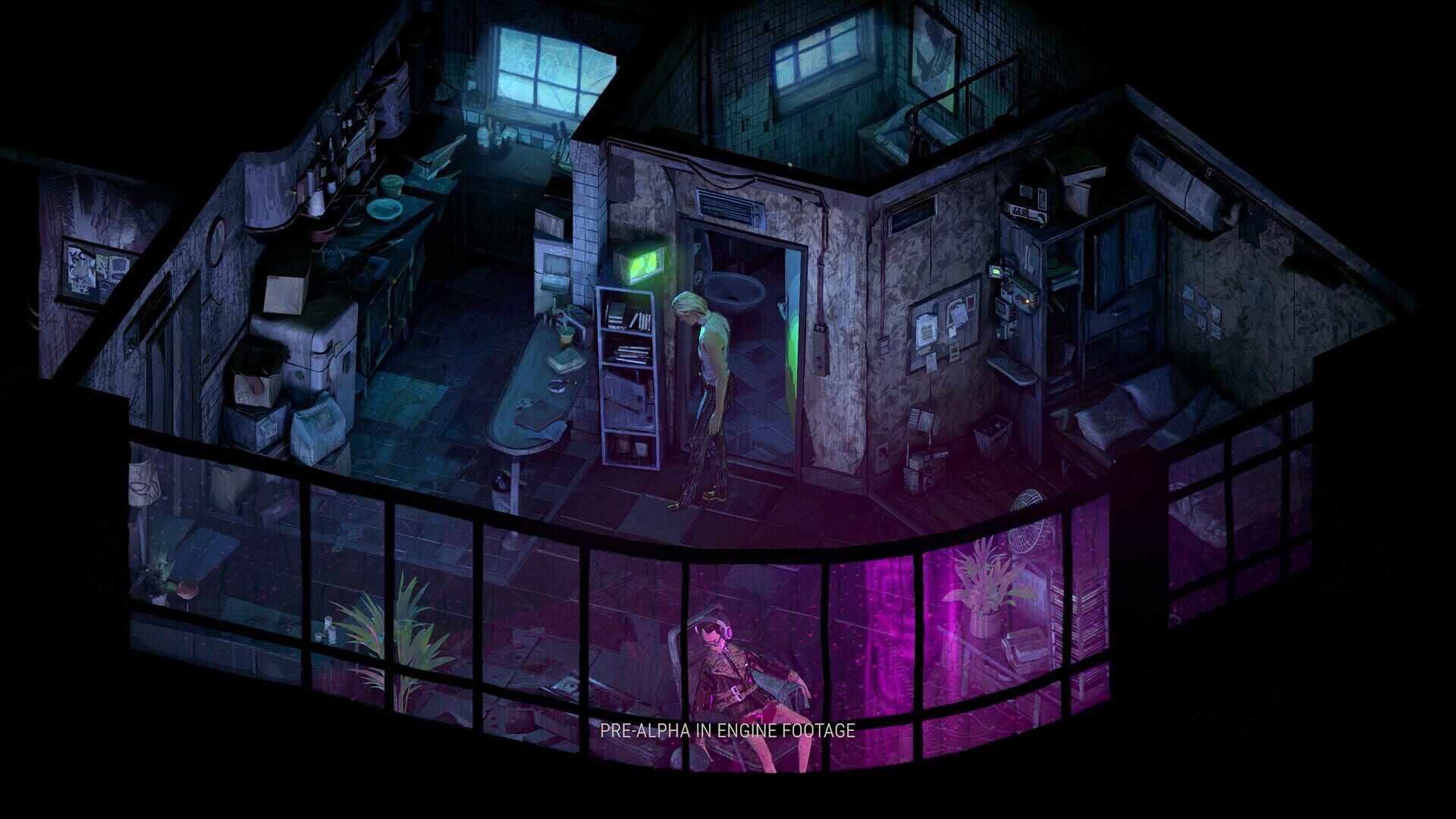
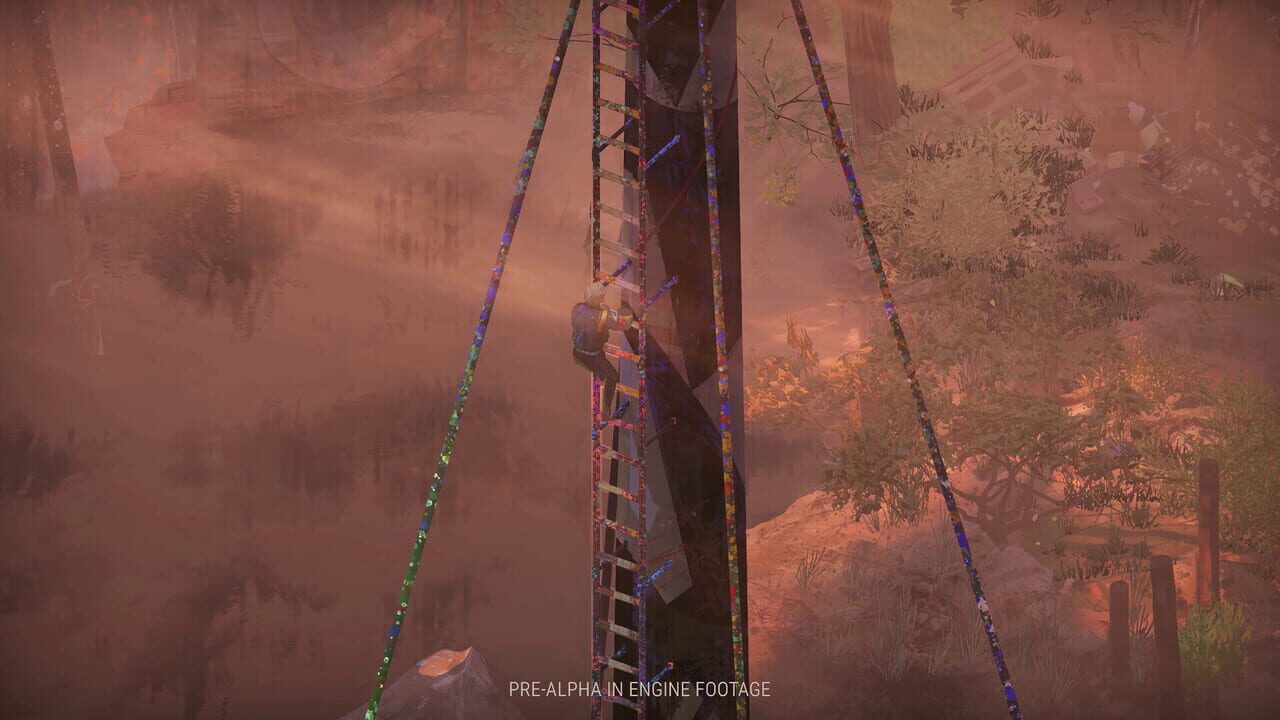
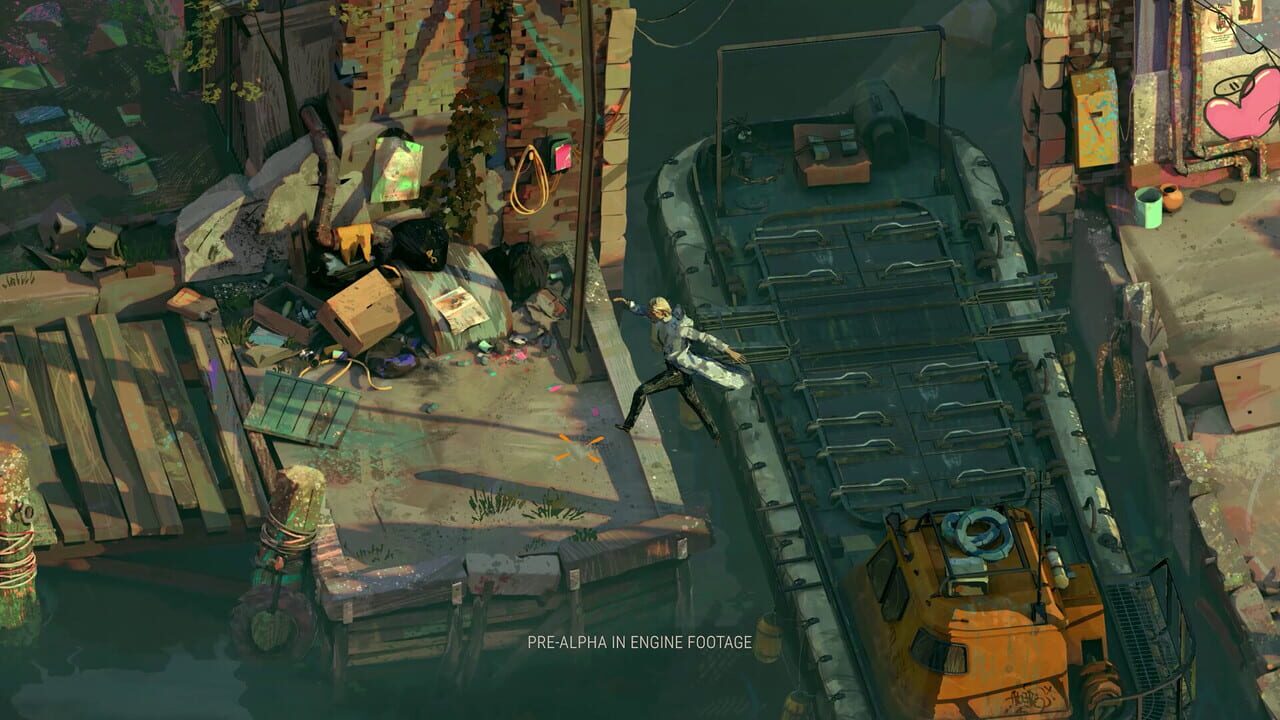
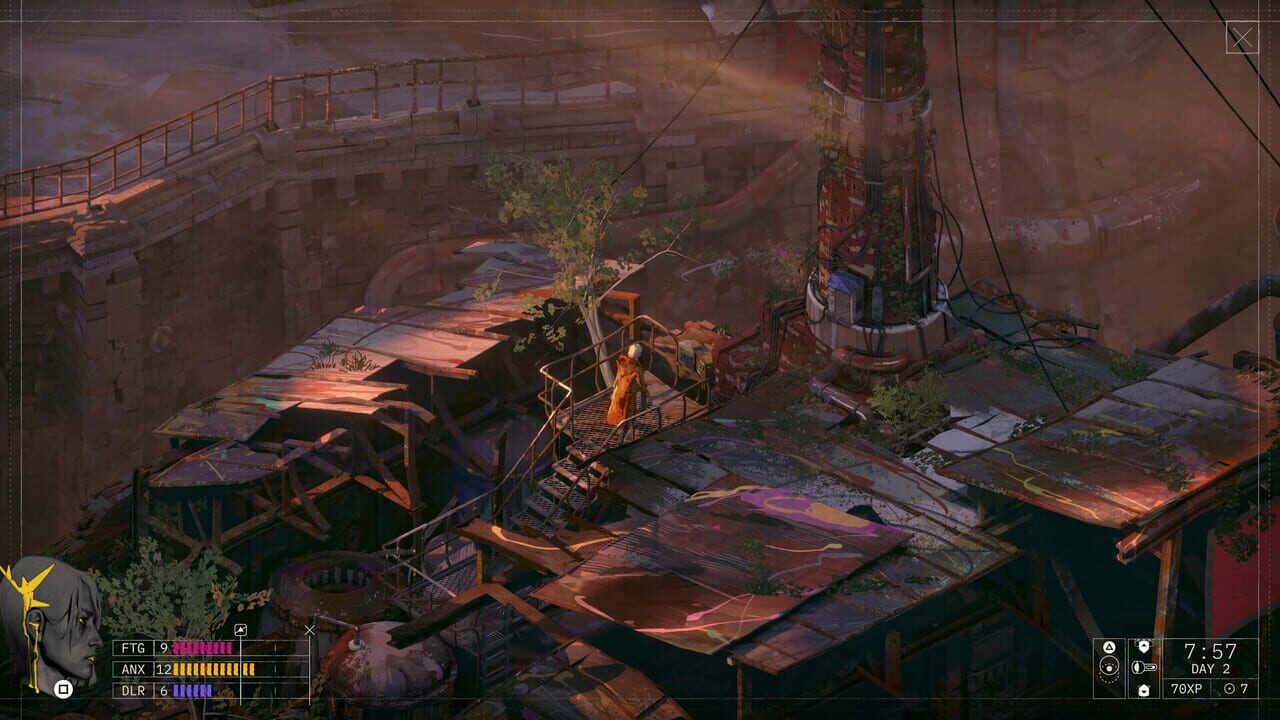
Zero Parades: For Dead Spies, released for PC on 21 May 2026, is the second game from ZA/UM, the studio whose Disco Elysium in 2019 was the most distinctive role-playing game of its decade. Disco Elysium was a detective story. Zero Parades is a spy story, and the studio has framed the change of genre as also a change of moral structure: a detective story has a solution and therefore a right answer, and a spy story, in the studio's account, has neither. The player is a damaged operant on a last assignment, sent to reassemble a network that has come apart. This is a People and Culture essay, and it takes the game's premise as the occasion for a question the thriller genre has spent a century making sure nobody asks. What is the spy's actual labour. Not the espionage, the part with the documents and the dead drops. The other part. The part that is the job.
The labour is the legend, and the sociology of what a legend costs was worked out, a century before any intelligence service had the phrase, by Georg Simmel. In 1906 Simmel, one of the founders of the discipline, published an essay on the secret. His central move was to treat the secret not as a piece of withheld information but as a social form in its own right, a basic structure of human life with its own architecture and its own price. A secret, in Simmel's account, builds a second world. The person who keeps one lives, from then on, in two worlds at once: the apparent world that everyone can see, and the concealed world that only the keeper, and whoever shares the secret, knows is there. The relation between the two is not free. The secret has to be continuously maintained, held in place against the constant low pressure of the apparent world to absorb it, and the holding is work, and the work shapes the person doing it.
A spy is the human being who has taken Simmel's second world and moved into it permanently. Everyone keeps secrets, and so everyone does a little of this maintenance: the held-back opinion, the private grief, the part of a life a person does not bring to the office. But the ordinary secret is a room in the house. The spy's secret is the house. What the spy conceals is not a fact about themselves; it is themselves, the entire person, replaced for operational purposes by the legend. The spy lives full-time in the gap Simmel described, the permanent distance between the visible person and the concealed one, and the distance is not a feeling or a mood. It is a job site. It has to be staffed every waking hour.
It is worth being precise about why this is corrosive rather than merely difficult, and the precision comes from Erving Goffman, whose 1959 study The Presentation of Self in Everyday Life established the now-ordinary idea that all social life is performance. Goffman's claim was not cynical. He was not saying people are frauds. He was saying that the self a person presents in any given room is assembled for that room, that there is a frontstage where the performance runs and a backstage where it can be dropped, and that this is simply how human social life is built; the performance is not the opposite of sincerity but the medium of it. The office worker performs a professional self for eight hours and is not lying. They are doing the ordinary thing. And then they go backstage, home, off, and the performed self is set down, and the person rests in whatever is left when no performance is running.
The spy is the limit case of Goffman's model, and the limit is reached by removing one specific thing: the backstage. There is no off. The legend is performed in the safe house and the embassy and the bed and the half-asleep mutter, because a legend with business hours is a legend with a seam, and a seam is fatal. The spy is a Goffman performer who has lost the room where the performance stops. And this is the part the thrillers will not look at, because it is not exciting, only ruinous. If the self is partly produced and kept current by performance, as Goffman argued it is, then a person who performs a manufactured self continuously, for years, with no backstage to return to, is not a sincere person wearing a temporary mask over an intact face. The face under the mask is a muscle, and it is not being used. It atrophies, or it fuses upward into the legend, or - and this is the condition the spy story has always actually been about - the person loses reliable access to which of the two is which.
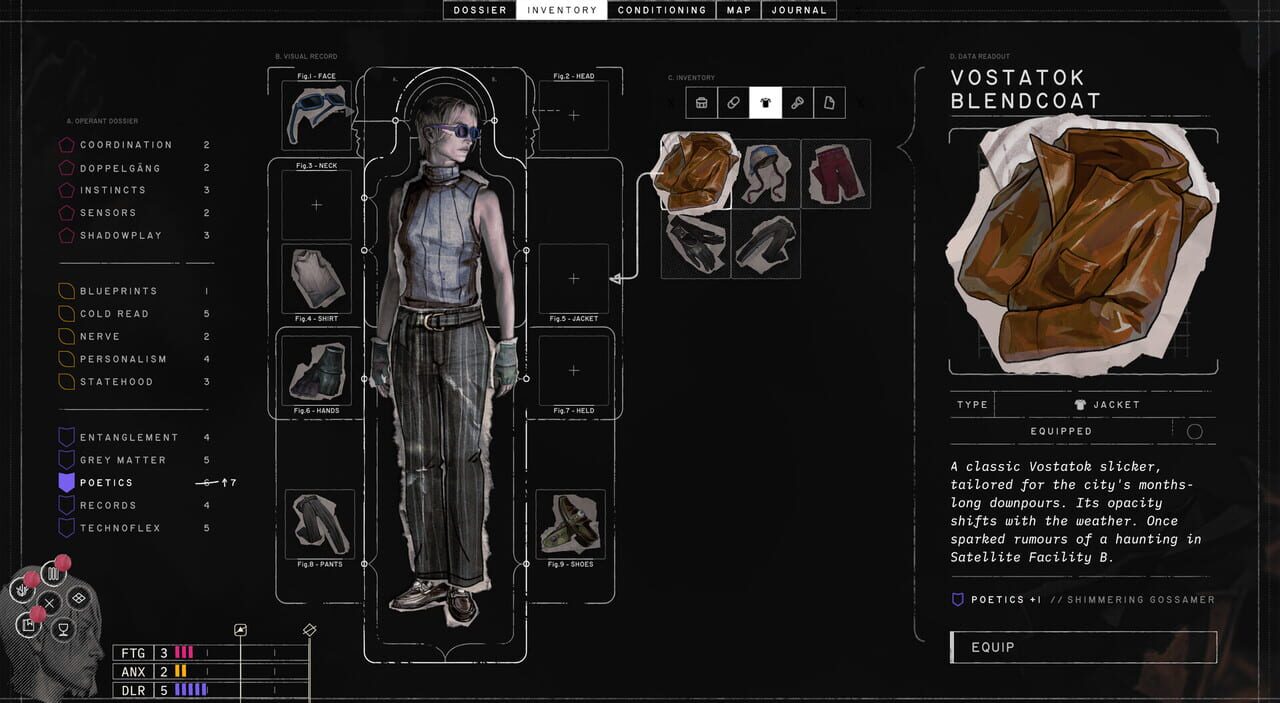
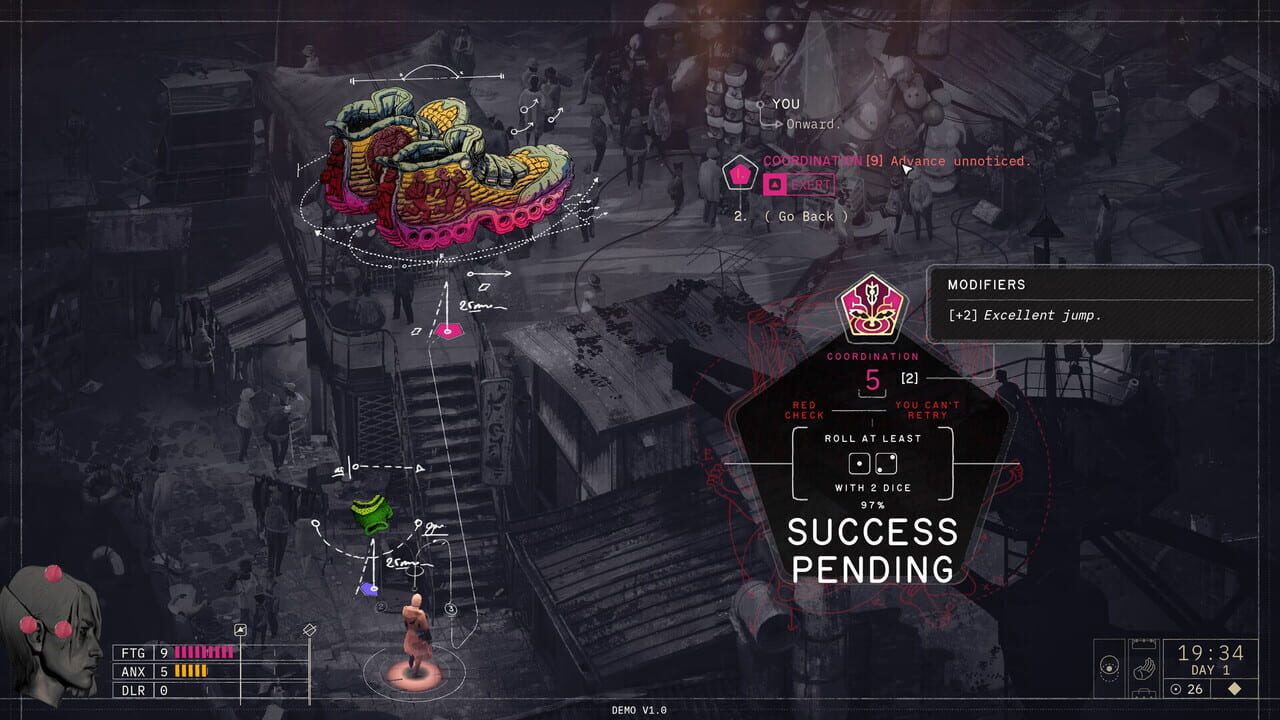
ZA/UM is, of every studio that could have made a spy game, the one whose existing design grammar was already built for this. Disco Elysium's formal achievement was to render the self not as a fixed protagonist but as a contested interior space, a parliament of skills that argued, lobbied, and interrupted, so that the player experienced selfhood as the ongoing and unfinished management of a crowd. Zero Parades carries that architecture into the spy's life, with a developed skill set and a system the studio calls Conditioning, which lets the player reinforce the protagonist's thoughts and shape her identity over time. Put the espionage premise on top of that machinery and the result is exact rather than metaphorical. A spy, in this rendering, is a person whose interior parliament has been infiltrated. One of the voices in the committee is a person who does not exist, installed there on purpose, by an employer, and given a vote.
This is what makes sense of the studio's claim that a spy story has no right answer available. A right answer, in the moral sense, is not only a matter of knowing the good; it requires a stable self to act from, a continuous person whose commitments hold across situations so that the choice made in one room can be answered for in the next. That continuity is precisely the thing the trade spends. The spy has traded a continuous self for operational flexibility, because the job required the trade, and a person assembled fresh for each room, conditioned and re-conditioned, cannot locate the fixed point that moral choice is measured from. The absence of a right answer in Zero Parades is not a writer's flourish. It is the accurate consequence of the premise. A person who has been many people, professionally, for long enough, has mislaid the one who could be held responsible.
The obvious objection is that this reads a melancholy sociology into what is, after all, a genre with car chases and gadgets and a long history of being enjoyed as escapism. But the spy thriller has always run on two tracks, and only one of them is the track of escapism. The other track, the realist one, the tradition that treats the trade as damage rather than adventure, has understood for sixty years that the spy story is not really about secrets and nations. It is about what sustained, professional, unrelieved deception does to a person, and it uses the apparatus of espionage because espionage is the one occupation where the divided self is not a poetic figure but a line in a job description. ZA/UM did not choose the genre for the dead drops. They chose it because it is the genre in which their actual and only subject, the self as a contested and not entirely reliable interior, stops being an artistic conceit and becomes a workplace condition with a casualty rate.
And the casualty is recognisable, which is the final reason the game's premise reaches past its niche. Almost nobody reading this is a spy. But the gap Simmel named, the permanent low-grade labour of maintaining a presented self at some distance from a concealed one, is not exotic. It is the texture of a great deal of ordinary modern work. The service-sector worker performing warmth on command, the employee whose politics or grief or exhaustion cannot come through the door, the person managing a public-facing self across a working life - all of them are doing, in a smaller way and with a backstage still intact, the thing the spy does without relief. The spy is not a fantasy of a more exciting life. The spy is a fantasy, and a warning, drawn from the most ordinary thing there is: the quiet daily work, which Zero Parades has the nerve to follow to its end, of being someone slightly other than oneself for money, until the someone and the self can no longer be told reliably apart.