In 1955 the sociologist Erving Goffman took a job as an assistant to the athletic director at St. Elizabeths Hospital, a federal psychiatric institution in Washington that then held several thousand patients. The job was a cover. Goffman wanted to watch the institution at the level of its ordinary days, from the inside, without being a doctor or an administrator or anyone the patients would have a reason to perform for. He spent close to a year in the wards. The book that came out of the year, Asylums, published in 1961, was not really a book about psychiatric medicine. It was a book about a kind of place, and the kind of place turned out to be far more common than the title made it sound.
Goffman called it the total institution: a place where a large number of like-situated people, cut off from the wider society for an appreciable period, together lead an enclosed and formally administered life. The prison was one. So were the army barracks, the boarding school, the monastery, the labour camp, the ship a long time at sea. What Goffman found across all of them was the same unexpected thing. The official institution, the one made of rules and staff and the printed daily schedule, was never the whole of the institution. Underneath it, without fail, the inmates assembled a second one: an informal society with its own ranking, its own small economy, its own routes of favour and protection and exchange. Society could not be switched off by confining the people who carried it. Confine them, and they built it again, quickly, and with most of the decoration left off.
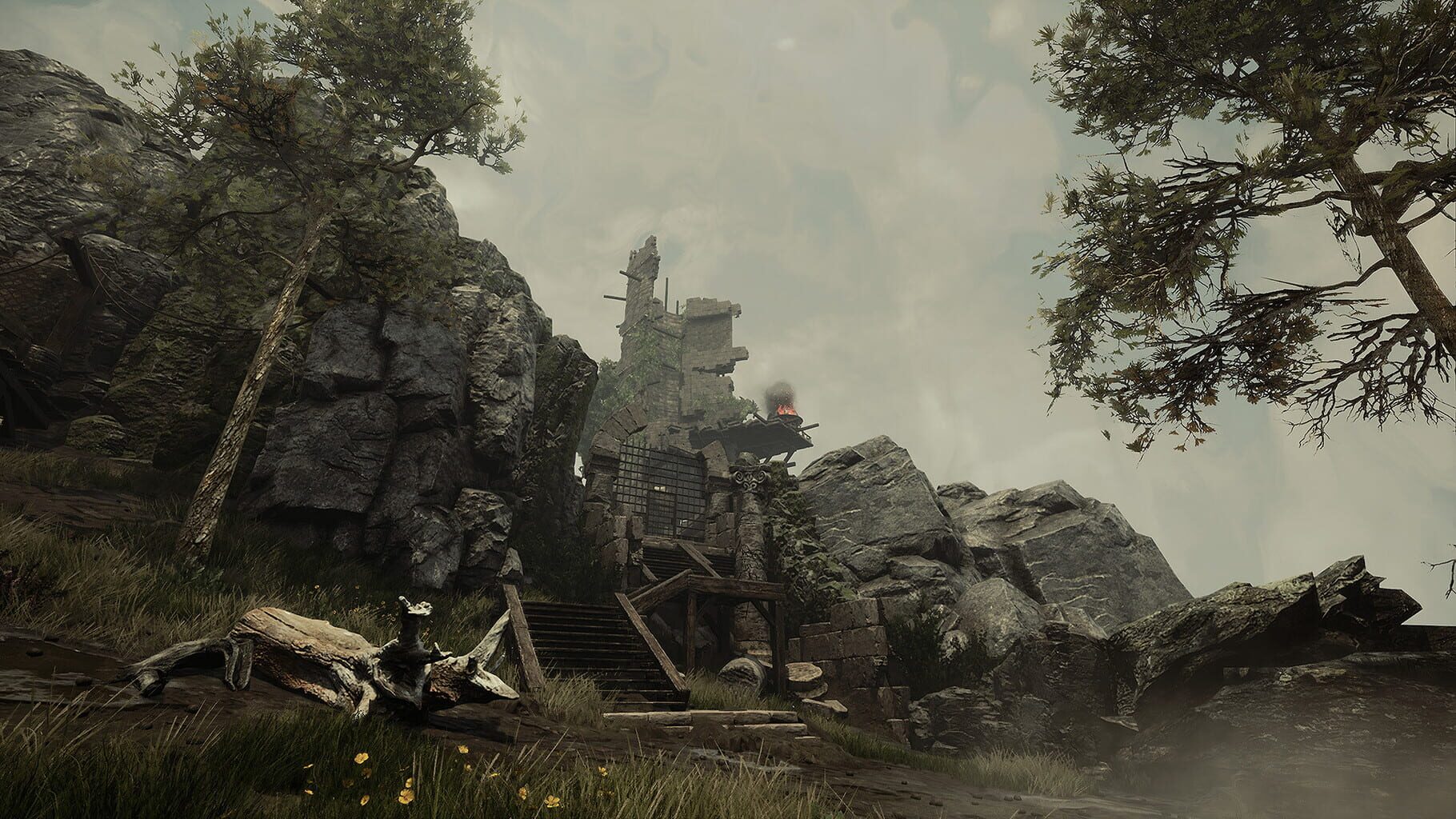
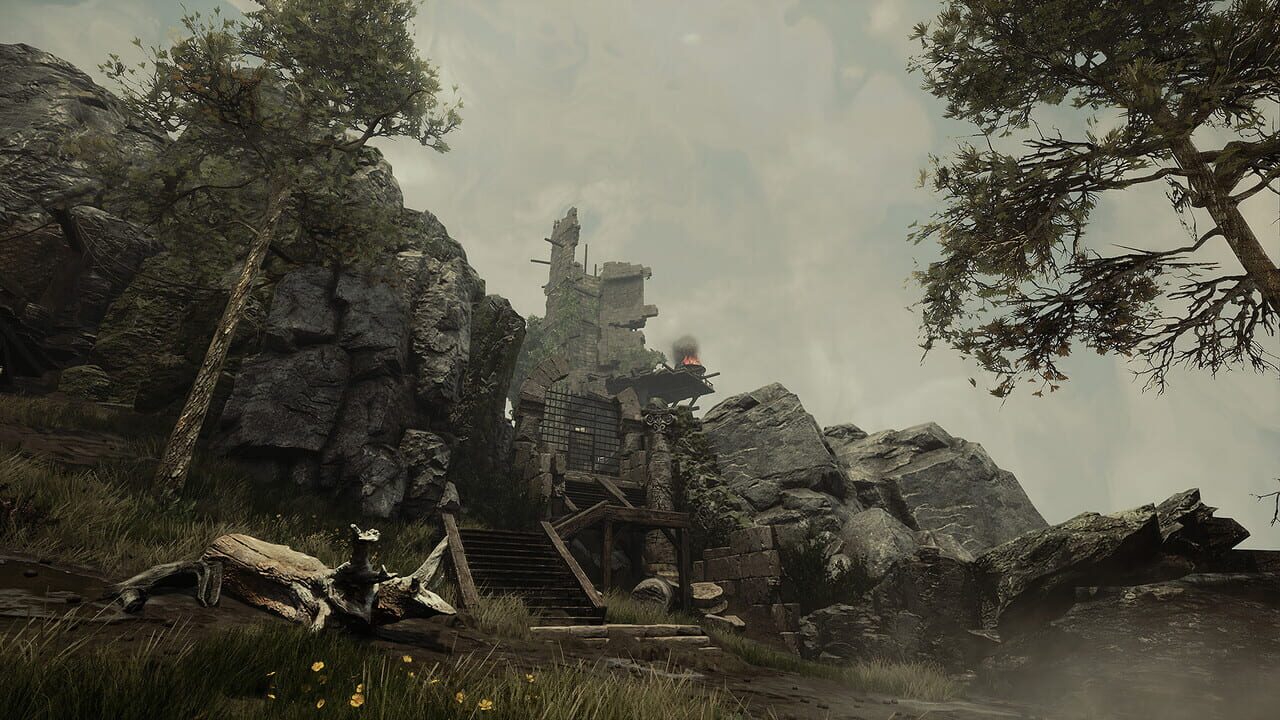
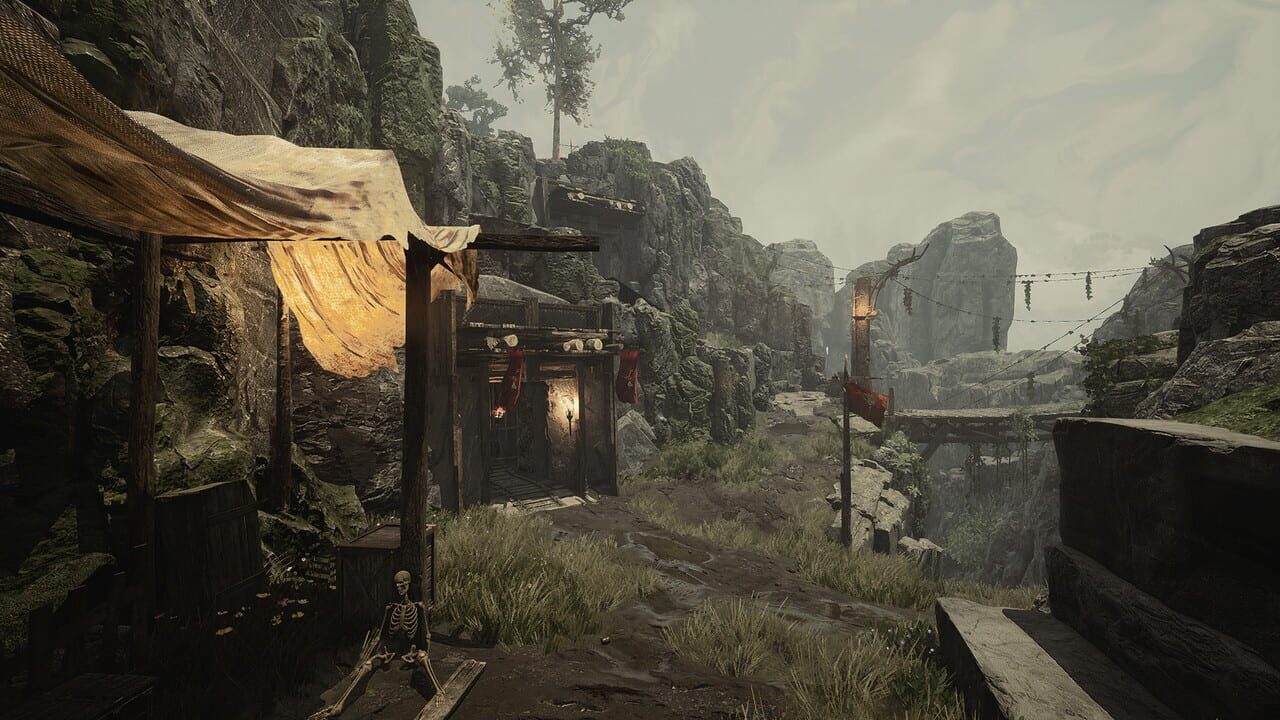
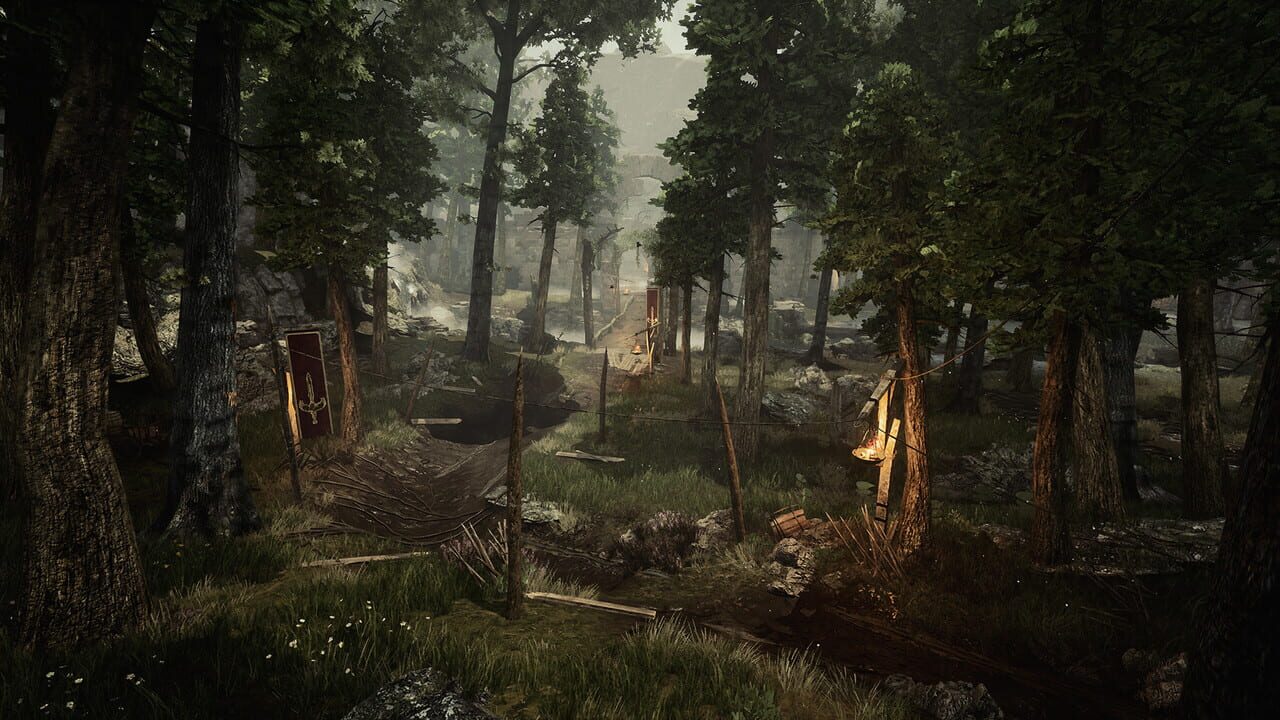
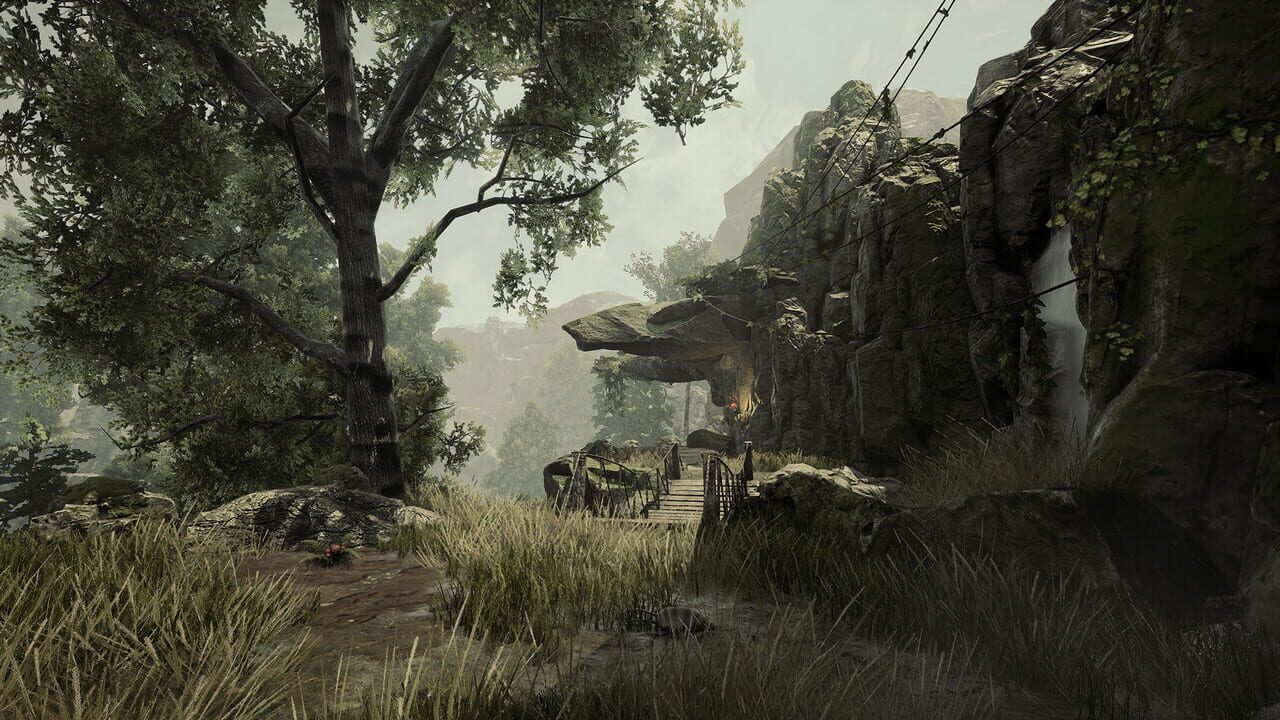
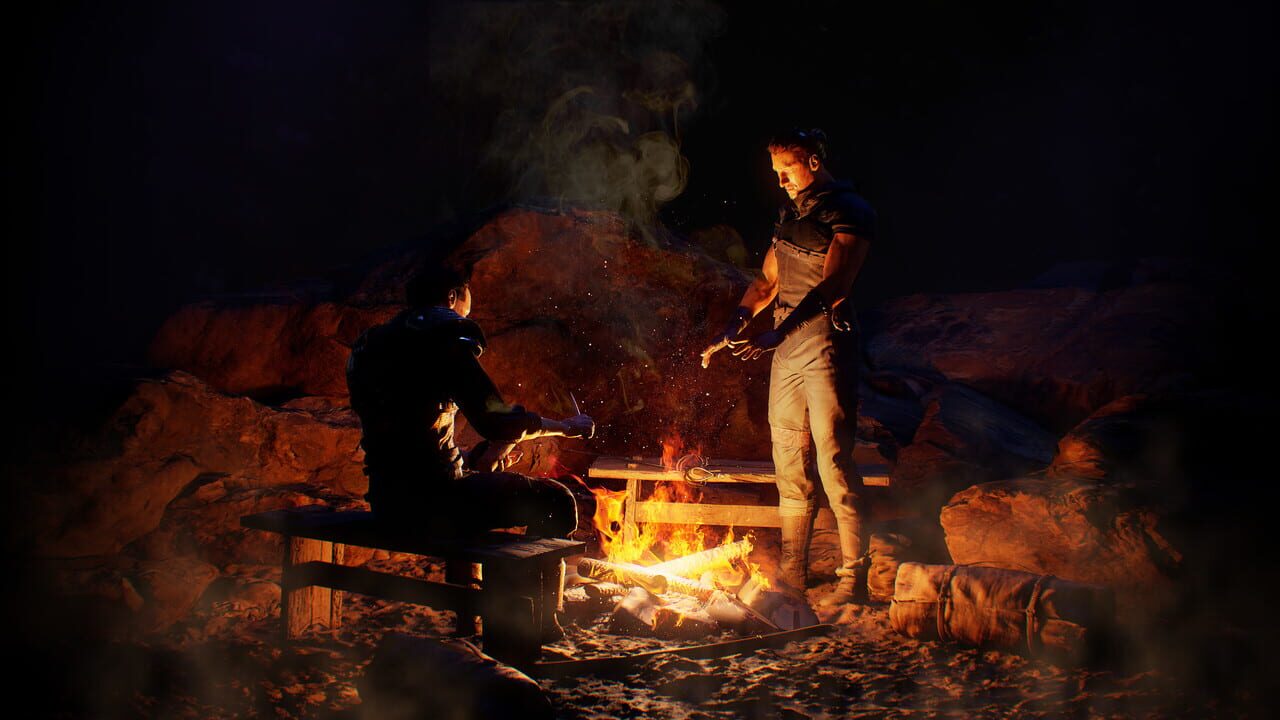
Gothic 1 Remake, which the Barcelona studio Alkimia Interactive and the publisher THQ Nordic release on 5 June 2026, is a remake of a German role-playing game from 2001, and it is built, from its first minutes, inside exactly that proposition. The premise is a penal colony. A kingdom at war needs a particular ore that can be mined in only one valley, and it has solved the labour problem the way states have generally solved it, by sentencing men to the work. To keep them at it, the kingdom's mages raised a barrier over the whole valley, a magical dome the convicts cannot cross. The barrier worked, and then it worked too well. It sealed the guards and the mages inside along with the prisoners, and the kingdom's authority within the valley simply evaporated. What is left is a few thousand condemned men, a finite supply of food and ore, no king, no wall standing between any of them and any other, and the rest of their sentences to serve. The colony the player is dropped into at the start of the game is what those men have made of that situation. They have built a society. This is a People and Culture essay, and its argument is that the society they have built is worth looking at closely, because it is society with the manners taken off.
The colony is, in Goffman's exact sense, a total institution that has lost its staff, which means it is nothing but underlife: the informal inmate society with the official one burned away from on top of it. The game's design makes that underlife the entire content. The valley's prisoners have gathered into three camps, and a new convict, which is what the player is, arriving with nothing and known to no one, cannot simply exist in the valley as an independent man. He has to attach himself to one of the three, because the camps are the machinery through which food, shelter, ore, and protection are distributed, and a man attached to nothing receives none of them. The opening hours of Gothic are widely remembered by the people who played the 2001 original as punishing, and the memory is accurate, but the difficulty is not really a difficulty of combat. It is the difficulty of being nobody in a place where belonging to somebody is the precondition of eating. The game's first lesson is how to find a patron.
The three camps are not three flavours of the same arrangement. They are three different answers to the question of how a few hundred men with no king over them should be held together, and the differences are specific enough that the player, simply by living under each in turn, receives an education in something the political-science seminar struggles to deliver. Max Weber, assembling the foundations of modern sociology in the years before his death in 1920, argued that domination, the plain fact of some people reliably obeying others, is never only force. Force by itself is too expensive to run a society on for long. Domination becomes durable only when it is also believed in, and Weber sorted the kinds of belief into three. There is traditional authority, obeyed because it is old and has always been obeyed. There is charismatic authority, obeyed because of the extraordinary personal pull of a particular leader. And there is legal-rational authority, obeyed because of impersonal rules and offices to which the ruler too is understood to be bound.
The colony runs the better part of Weber's typology at once, distributed across its three camps. The Old Camp, in the valley's original fortress, is held together by something close to charismatic-personal rule hardening into a protection arrangement: an apex figure, a layer of ore barons beneath him, the structure standing on the leader's force of personality and the credible violence behind it, and financed by trading mined ore out through the barrier for goods. The camp the game sets against it is organised differently, around a shared purpose, the plan to bring the barrier down, and so it runs closer to a rational and purposive enterprise, a project with an end, in which a man's standing is set more by what he contributes to the work than by whose favour he is currently holding. The third camp, away in the swamp, is a religious order, a brotherhood gathered around the worship of a sleeping god and the swampweed they cultivate, and its authority is charismatic in the oldest and most literal sense, the sacred kind. The player spends the game moving among the three, and the moving is the argument the design is making. To live first under a powerful man's protection and then inside a common plan is to feel, in the body and not just in the abstract, the difference between two ways of being governed. Weber's three types are a diagram on a page until something obliges a person to inhabit them in sequence. Gothic obliges a person to inhabit them in sequence.
This is the matter the colony is unusually honest about, and it is the frame worth carrying back out of the game. Power, once the manners have been taken off it, is control over the necessities. In the colony there is no mystery about what the necessities are. They are food; ore, which is at once the colony's money and the measure of a man's labour; ground, meaning territory held; the protection of stronger men; and the threat of violence that stands behind every other item on the list. Authority in the valley reduces, with very little left over, to the question of who controls those things, and every man in the colony knows it, because the colony is too small and too poor to afford the alternative. The wider world beyond the barrier is not different in kind. It is different in dress. A large modern society spends an enormous and continuous effort making power look like other things, like procedure, like title, like merit, like legitimacy, like a weather-system of abstractions that no individual is responsible for, and the effort is not purely cynical: some of it is the machinery by which a society larger than a valley avoids the valley's bluntness and its violence. But the dressing also conceals, and the colony, by being too small to afford the dressing, lets a person see the mechanism with nothing over it. The reader who has spent forty hours learning to read the valley for who holds the ore and who commands the men who would use a blade has been handed, almost incidentally, a way of reading an office, a city, an institution, a state.
The obvious objection is that this is a great deal of analytical weight to rest on a fantasy game, on a valley sealed by wizards and a sleeping god and ore with magic in it and the whole inherited apparatus of the genre. The objection has the situation backwards. The fantasy is not what undermines the reading. The fantasy is what makes the reading possible. A realistic prison drama puts the viewer immediately on guard, because a real prison is a real and present moral emergency, and a mind looking at one is rightly occupied with sympathy and outrage and has little spare attention left over for structure. The sealed and invented valley triggers none of that alarm. It presents the player with a clean case, a society assembled from nothing by a known population inside a bounded space with the variables kept legible, and it lets the player study the mechanics of power with the moral guard lowered. The barrier is not background colour. It is the wall of the laboratory, and the experiment it makes possible is the reason the game is worth more than its genre.
It matters, finally, that the original Gothic came from the studio it came from. Piranha Bytes, the small German developer that built the 2001 game, made its reputation on role-playing games that declined the genre's standard promise. The dominant role-playing game of the period mostly offered the player an ascent: arrive, be told quietly that you are the special one, accumulate power, save the world. Piranha Bytes started the player at the bottom of a working hierarchy, unspecial and unwelcome and weak, and made him earn each rung upward from the people already standing on it. That refusal is the reason the colony reads as observation rather than as wish-fulfilment. A studio chiefly interested in the power fantasy would have built the valley as a ladder. Piranha Bytes built it as a society, and a society is the harder thing, and the more honest thing, to have built.
There is a small skill the colony teaches, and it outlasts the game being switched off. It is the habit of entering an unfamiliar room and reading it the way a new prisoner reads the valley: locating, before anything else, who controls the food and the work, who commands the men who would do the violence, where the protection is and what it costs to stand inside it, and where, if anywhere, the exit is. The colony teaches that reading because in the colony the reading is survival. The wider world rarely makes its stakes so plain, and most rooms a person walks into are not penal colonies, and the difference is real and worth being grateful for. But the structure the reading finds is not native to the valley. It was only ever easier to see there, because the valley, alone among the places a person can be, could not afford to pretend that power was anything other than what it is.