

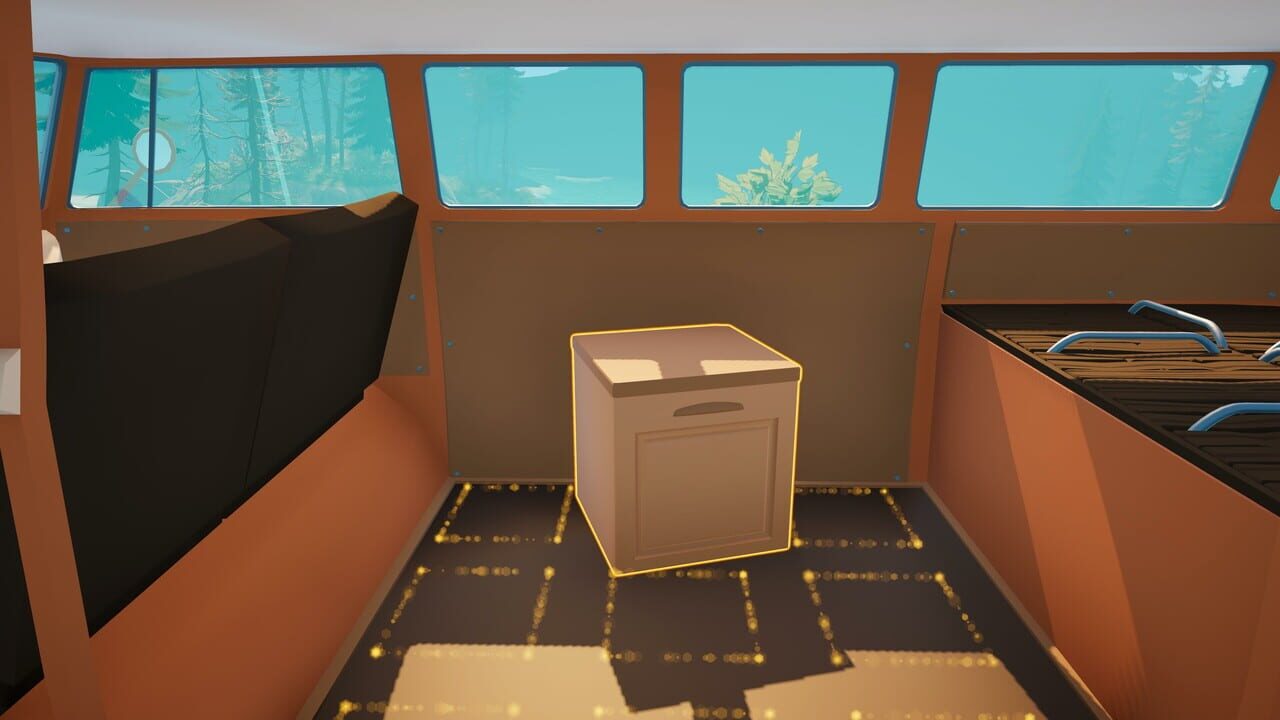

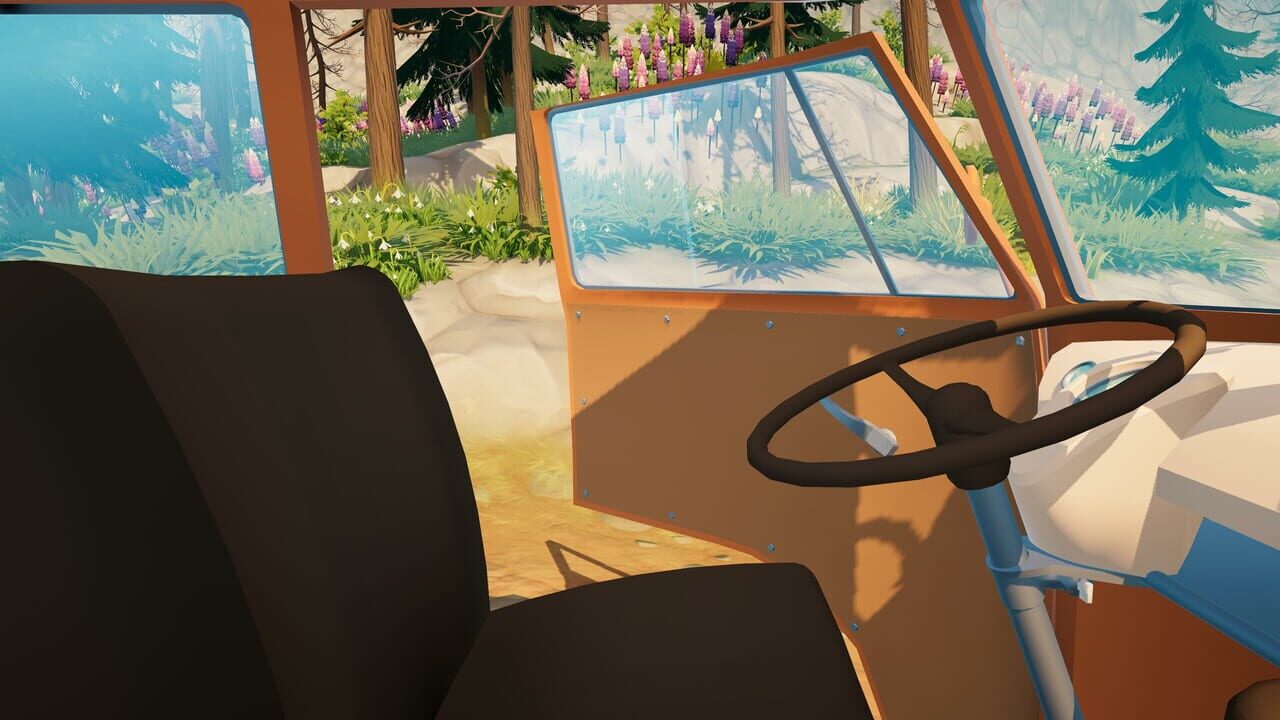
The morning light comes through the small rear window first. The window is set high, above the level of the bed, and the angle of the dawn means the light hits the opposite wall before it hits the sleeper. The space inside the vehicle is about sixty square feet. The sleeper's body knows the shape of the space at the resolution of small inconveniences resolved: where the head goes so the corner of the cabinet does not press on the temple, where the legs go so the propane line under the floor is not putting heat into the calf, where the right arm can extend without striking the kettle on the small two-burner stove that the right hand can reach without sitting up. The kettle is dry. The match is in the drawer the left hand can reach without sitting up. The sun is not yet over the ridge. The light against the opposite wall is the specific quality of pale-amber that the body has been waking up to for whatever number of mornings the vehicle has been in this configuration, in this part of the country, at this time of year. The space is small. The space is the space the body has organized itself around. The space is, at this hour, working.
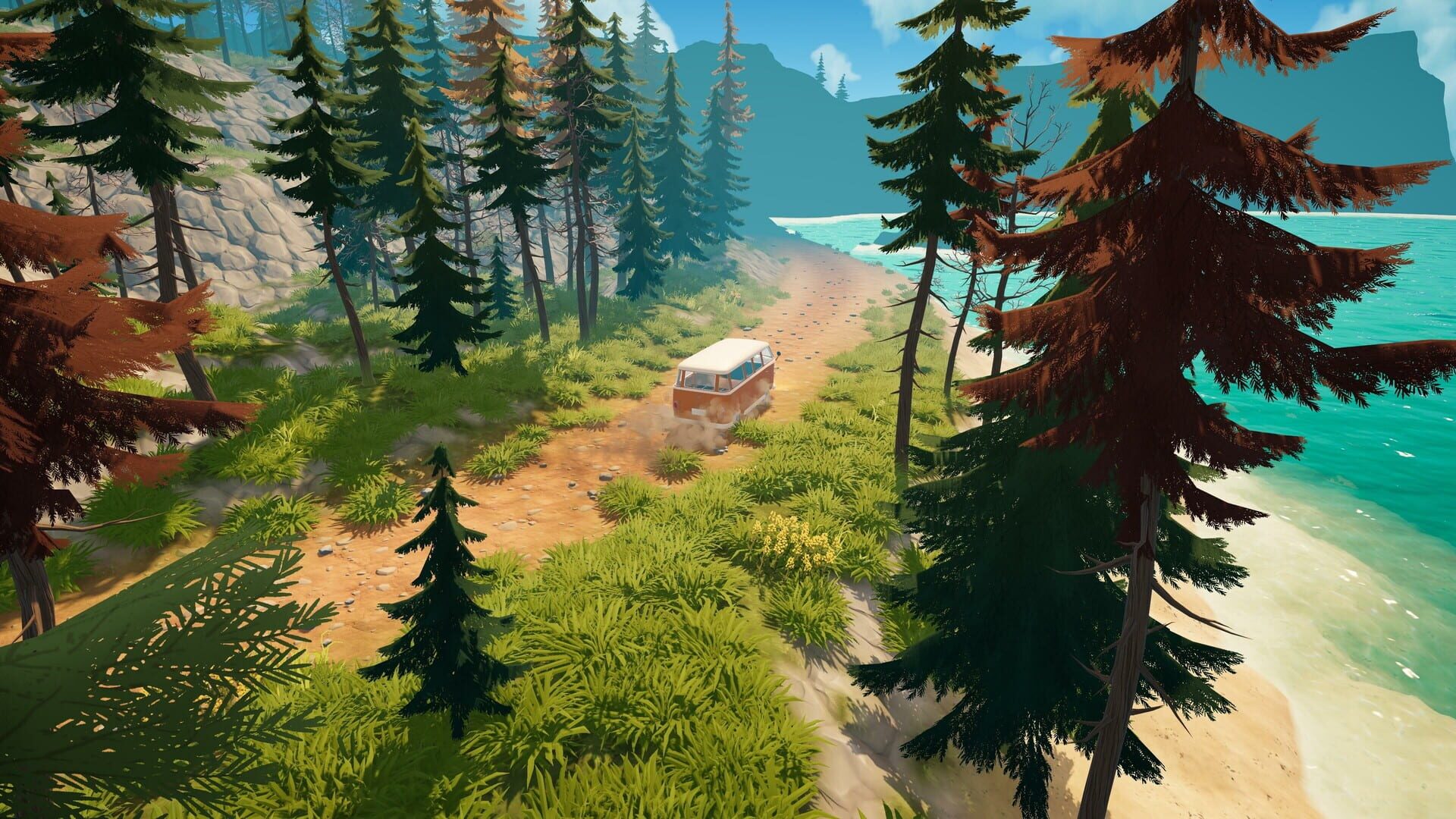
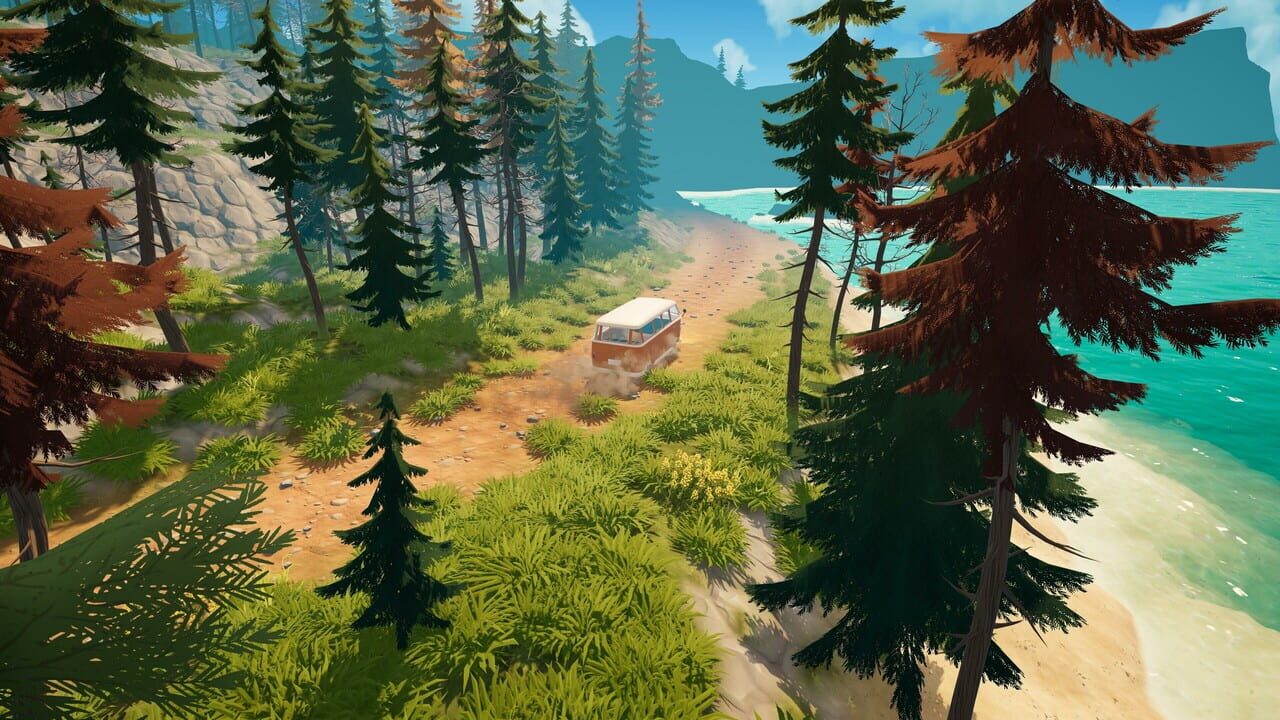
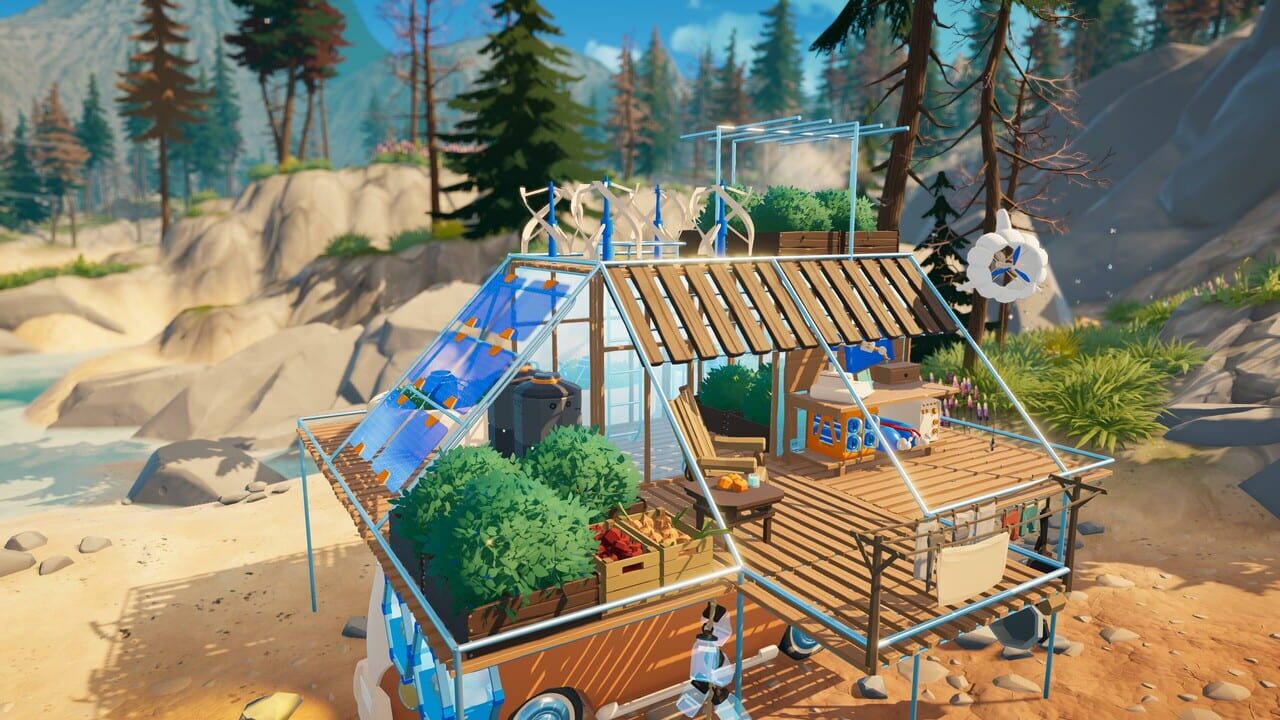
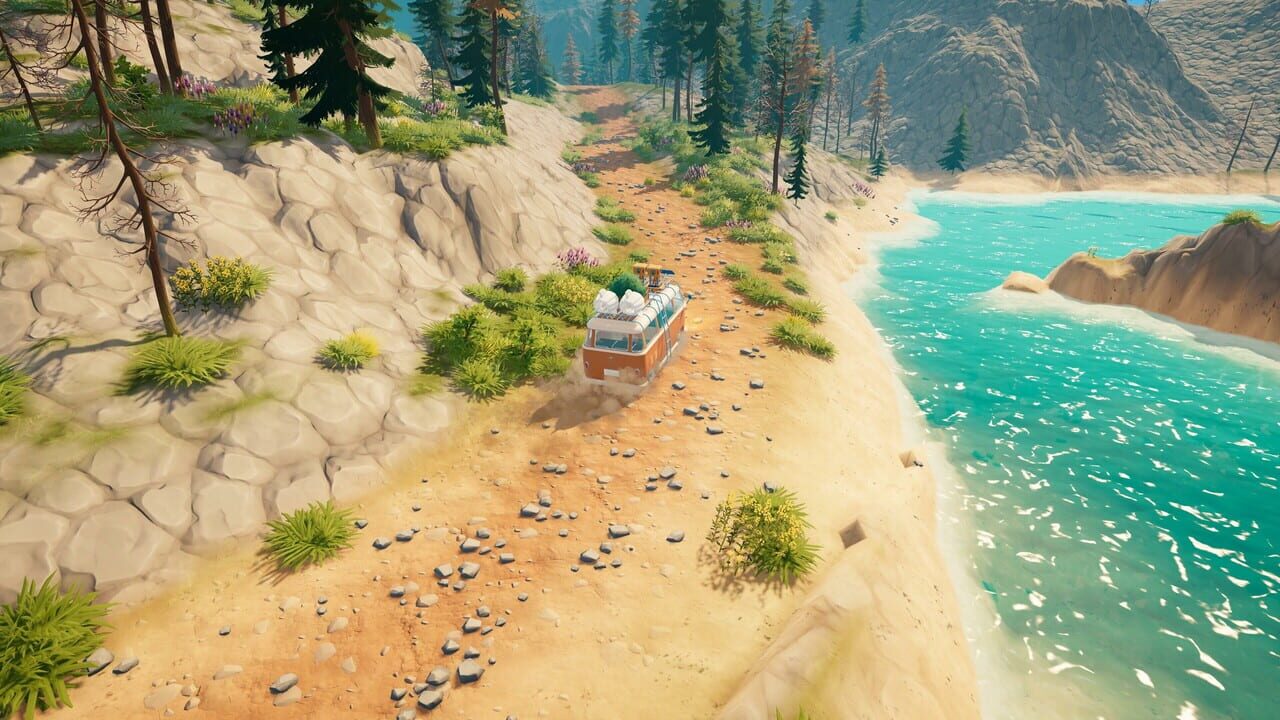
Outbound, the cozy near-future open-world exploration game released by the Berlin-based studio Square Glade in 2026, is the medium's most carefully assembled commercial argument that this small-vehicle-as-life is a coherent answer to a question the surrounding culture has stopped being able to answer cleanly. The game gives the player an electric camper van that can be upgraded, modified, parked, gardened, solar-paneled, wind-powered, water-tanked, and stocked into a mobile dwelling small enough to fit on a forest service road. The player drives, builds, plants, harvests, recharges, configures, and slowly produces a life whose systems are all, in a way contemporary adult life is structurally not, immediately legible to the person living inside them.
The frame this essay wants to give the reader extends past Outbound to the broader category of survival-crafting and cozy-building games the medium has been producing in steadily growing numbers since the mid-2010s. The frame is this: the appeal of these games is not escape from systems. The appeal is systems small enough to see. Most of the systems the contemporary adult depends on are deliberately illegible. The electrical grid, the supply chain, the housing market, the labor market, the food production system, the banking system, the data infrastructure that delivers most contemporary leisure, are all designed to be invisible to the people using them. The invisibility is part of how they work; the alternative - every adult having to understand the workings of every system they touch - is operationally impossible at the scale of modern populations. The invisibility produces, as a side effect that the contemporary cultural conversation has named in many vocabularies, a specific quality of disconnection from the conditions of one's own life. Outbound and games like it are commercial products that, in compressed miniature form, restore the legibility the larger systems have removed. The fantasy is comprehension. The fantasy is not new; it is the same fantasy that the back-to-the-land movement of the 1960s, the post-2008 small-farm revival, the 2010s tiny-house movement, the 2015-2024 van-life Instagram phenomenon, and the slightly older homesteading literature have all been variations on. The game is the latest, most commercially polished form.
Marc Augé, the French anthropologist whose 1992 book Non-Places: Introduction to an Anthropology of Supermodernity introduced one of the most useful contemporary frameworks for thinking about the spatial conditions of late modernity, gave the diagnosis the appeal is responding to. Augé's project was to identify a specific category of contemporary space he called the non-place. The non-place is a space designed for transit rather than for dwelling - the airport terminal, the highway rest stop, the chain hotel lobby, the chain restaurant, the shopping mall, the office park. The non-place is recognizable because it could be anywhere; the design has been deliberately decoupled from any specific local content. The non-place is also recognizable because the body inside it is not expected to deposit memory or to build relation. The body passes through. The non-place is the architectural expression of the fact that the body's relationship to the larger system it is operating inside has become a relationship of transit rather than of dwelling.
Augé's claim was that the fraction of contemporary adult life spent in non-places has grown substantially across the second half of the twentieth century and has continued to grow into the twenty-first. The average urban adult in a developed economy now spends a substantial fraction of their waking hours in spaces specifically designed not to be places, in Augé's strict sense. The commute is a non-place. The chain coffee shop is a non-place. The retail experience is mostly a non-place. The work environment, in many office contexts, is a non-place. Even some living environments - the corporate apartment, the rental property optimized for short-term turnover - drift toward the non-place category.
The interesting thing the contemporary cozy game does, in this Augé-shaped reading, is build a portable place against the non-place background. The camper van in Outbound is, structurally, the opposite of the non-place. It is small. It is specific. The body has organized itself around it at the resolution the body uses to organize itself around dwelling-spaces. The objects in it have accumulated meaning through the player's repeated handling. The space has, in Augé's strict sense, become a place, and the place can move. This is the design move that distinguishes the camper-van game from the chain-hotel game. The chain hotel is a non-place the player passes through. The camper van is a place the player carries. The portability is what makes the camper interesting; the place-ness is what makes the camper meaningful.
Albert Borgmann, the German-American philosopher of technology whose 1984 Technology and the Character of Contemporary Life developed one of the contemporary tradition's most useful frameworks for thinking about what daily-life technologies do to human attention, gave the second piece of the analysis the game's appeal requires. Borgmann's central distinction was between what he called the device and the focal thing. A device, in his vocabulary, is a contemporary technology that efficiently delivers a commodity by concealing its own workings. The central heating system is a device. The microwave oven is a device. The streaming service is a device. The defining feature of the device is that the user does not need to engage with the conditions of the commodity's production; the device hides its mechanics, allows the commodity to be summoned with minimal effort, and recedes from the user's attention when it is operating correctly. The user receives the commodity. The user does not engage with the production. This is, in the contemporary economy, mostly what counts as good design.
The focal thing, on Borgmann's account, is the opposite. The focal thing requires engagement with its own conditions. The wood stove is a focal thing: the user has to gather the wood, build the fire, manage the burn, clean the ashes, and the warmth that results is inseparable from the practice that produced it. The home-grown meal is a focal thing. The repaired-rather-than-replaced object is a focal thing. The walked-rather-than-driven errand is a focal thing. Focal things, on Borgmann's argument, gather human attention in a way devices do not. Focal practices - the recurring engagements that focal things support - are part of how the meaningful texture of pre-modern adult life was assembled. Borgmann's claim was that the device paradigm has been progressively replacing the focal practice across most of the activities that constitute contemporary life, and that the replacement has come with costs the surrounding cultural conversation has not been able to fully name.
Borgmann's framework, written in 1984, has aged into one of the more accurate diagnoses of what has happened to adult attention in the four decades since. The fraction of contemporary daily activity that is device-mediated has grown substantially. The fraction that is focal has shrunk. The cultural objects that have attempted to make focal practice available again - the gardening books, the bread-baking revival, the small-farm publications, the tiny-house and van-life literatures - are, on this reading, all responding to the same underlying condition: the recognition that the device-paradigm life is, in some specific way the participants can feel but cannot easily name, insufficient.
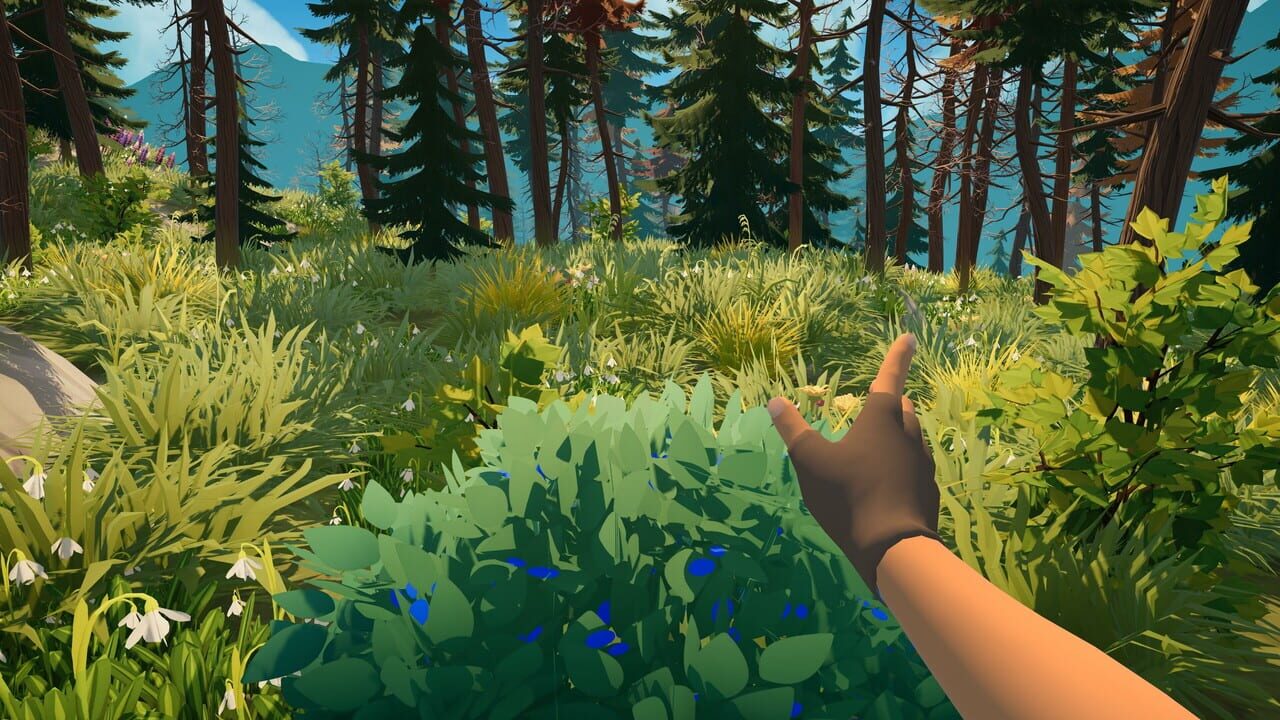
Outbound is the focal-practice cozy game in commercial form. Every system in the camper van is structured as a focal practice. The power comes from a solar panel the player has installed, oriented, and maintained. The food comes from a garden the player has planted, watered, weeded, and harvested. The water comes from a tank the player has filled. The mobility comes from a battery the player has charged and a route the player has chosen. The dwelling comes from a configuration the player has arranged. Nothing in the camper is a device in Borgmann's sense. Everything is a focal thing. The player's engagement is the production. The production is the activity the player is paying the game's purchase price to do.
This is why the genre is not, on a careful reading, escapist. The escapist reading would say that the genre is asking the player to retreat from a complicated modern life into a simpler fictional one. The escapist reading would be partially correct and substantially misleading. The genre is offering the player the experience of engaging with focal practices that the surrounding life has, by structural change in the conditions of work and dwelling, removed. The player is not escaping. The player is, in a small commercial register, recovering a kind of engagement that the contemporary economy has been progressively withdrawing. The recovery is fictional but the recognition is real.
Shelley Mallett's 2004 review of the home-studies literature gave the third piece this analysis needs. Mallett's review documented that the academic study of "home" had, over the previous several decades, converged on an understanding of home as a multi-dimensional concept - shelter, social relations, identity, routine, control, memory, return - rather than as a property-bounded house. The implication of the convergence is that home, in any operationally meaningful sense, is not a building. Home is a configuration the body has organized itself around, supported by enough material continuity that the configuration can persist across days. A house is a particularly stable infrastructure for supporting that configuration. A house is not the only infrastructure capable of supporting it.
The camper van, in Outbound's design, is an alternative home-infrastructure that supports the configuration with substantially less stable material continuity than a house provides, in exchange for substantially more configurability. The body in the camper has, in the morning, a configuration that is a working home in Mallett's sense: the cabinets are where they were last night, the kettle is on the same stove, the bed is the same bed, the small accumulated possessions are in the same positions, the routines of the morning are the same routines they were yesterday. The home-configuration is intact. The home-infrastructure has, however, moved seventy miles since the previous morning, because the body that organized itself around the configuration was inside an infrastructure that moves.
This is the small useful argument the game is making for what dwelling can be. Dwelling does not require fixed property. Dwelling requires a configuration the body knows and an infrastructure stable enough to support it. The infrastructure can move. The configuration can travel. The body can be at home in a vehicle, in a hut, in a tent, in a borrowed apartment, in a configured workspace at a friend's house, with the home-configuration intact across the various infrastructures the body passes through. This is not, on the empirical evidence, a fringe arrangement. It is how a substantial fraction of contemporary adults already live, with various degrees of stability and choice, and the cultural conversation has been slow to develop the vocabulary that takes the arrangement seriously.
Tim Cresswell, in On the Move (2006), is worth registering briefly because the game's mobility politics deserve a careful note. Cresswell's argument was that motion through space is never socially neutral. Different kinds of motion carry different cultural meanings, and the meanings are not symmetrical: the well-dressed traveler in an expensive vehicle is read as a tourist; the same person in a less expensive vehicle is read, depending on context, as either a backpacker or as a person living rough. The mobility of the privileged class is celebrated as freedom; the mobility of less-privileged populations is policed as itinerancy. The camper-van fantasy that Outbound is producing depends on the player occupying the privileged-mobility position. The camper is read as authorship rather than as displacement, as choice rather than as necessity, as life-design rather than as the absence of housing alternatives. The game's bright color palette and competent inhabitant signal which kind of mobility the player is participating in. This is not an attack on the game; it is a reminder that the camper-as-freedom fantasy works inside a specific social-political envelope, and that the same vehicle, with the same systems, occupied by a different body in different conditions, is a different cultural object. The 2020 Chloé Zhao film Nomadland is the obvious adjacent reference: same vehicle category, very different cultural meaning, almost no aesthetic overlap. Both are real. Both are about the same physical infrastructure. The infrastructure does not specify the meaning; the social-economic position of the body inside it does.
What Outbound contributes to the cultural conversation about dwelling, motion, and the legibility of systems is the small interactive form of a focal-practice life that the player can return to repeatedly across the play sessions. The form is not solving anything. The form is not a policy proposal. The form is, in the small specific way commercial games can sometimes do this kind of work, a place for the player to practice the kind of attention the focal-practice life would require. The practice has cognitive consequences. The player who has spent twenty hours engaging with traceable systems in a small mobile dwelling is, on the available evidence about how cognition adapts to environments, a slightly different cognitive object at the end of those twenty hours than they were at the start. The body has been practicing comprehension. The practice is small. The practice is real.
The frame the reader should walk away with: the contemporary survival-cozy genre is not, in the dismissive cultural-criticism reading, escapism. The genre is a commercial form for engaging with focal practices that the surrounding economy has been quietly removing from adult life. The player who feels relief inside an Outbound session is responding to the same recognition Borgmann was naming in 1984, and the recognition is a useful one. Notice, when the next cozy-survival-crafting game arrives, what specific focal practices the design is making available. The choices the design is making are choices about which kinds of engagement the form is treating as worth restoring. The choices are usually, on a careful look, more thoughtful than the surrounding marketing makes them seem.
The kettle in the camper is on the stove. The water is just below a boil. The window is now bright; the sun has cleared the ridge. The day's small routines are about to begin. The cabinet door at the back is loose on its hinge again and will need a screw tightened before the next drive. The repair will take three minutes. The tools are in the drawer the left hand can reach.